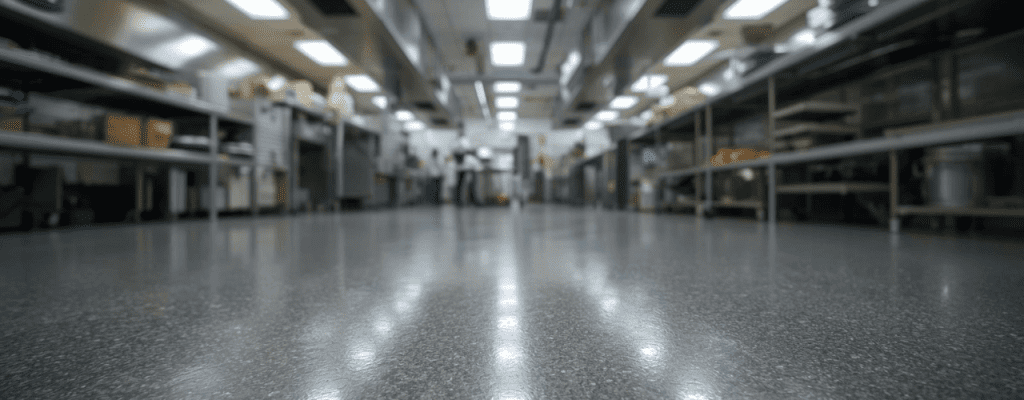
Is Resin Kitchen Flooring Keeping Up with High-Output Delivery Kitchens?
Wednesday, 18 March 2026
Delivery-only kitchens run hot, wet and fast. Fryer lines, wash stations and drain edges take...
Read More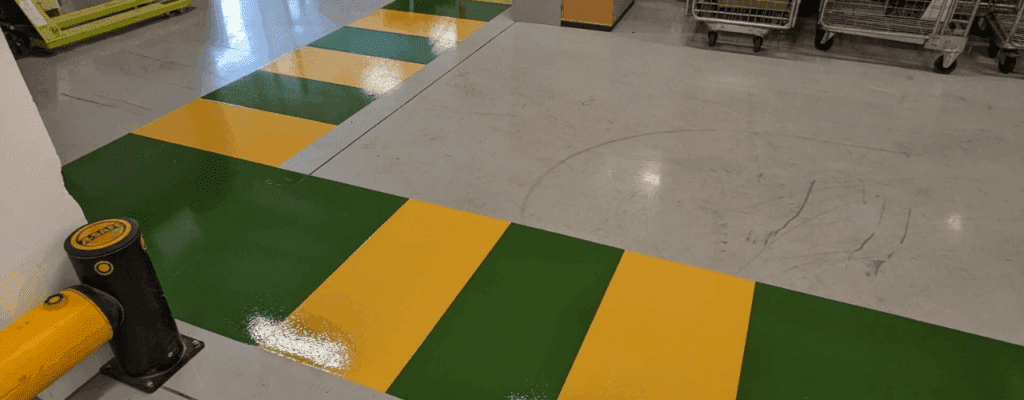
In busy commercial environments, unclear movement and poorly defined work areas often slow operations. Forklifts pause, pedestrians hesitate, and new staff rely on verbal instructions rather than visual cues. Over time, these inefficiencies compound.
This is where teams use industrial and industrial and commercial resin flooring with integrated colour zones to structure how people, vehicles, and materials move through a space, supporting smoother workflows and clearer day‑to‑day operations. Delivered as a fully designed and installed system, this approach can turn floor layout into a longer-term operational asset.
In commercial environments, colour zoning works best when teams treat it as part of the overall floor layout, not as an add‑on applied after installation. When specified as part of commercial resin flooring, zoning decisions become embedded into how the space functions from day one. Decisions about routes, boundaries, and working areas shape how people and vehicles move long before the floor goes down.
When teams plan colour zoning at layout stage, they can align zones with real movement patterns, vehicle access points, and operational priorities. This avoids relying on temporary markings later and helps the floor support day‑to‑day activity without constant adjustment or rework.
Clear visual structure reduces hesitation, particularly in facilities that rely on industrial and commercial resin flooring to manage shared pedestrian and vehicle routes. When routes and boundaries are instantly obvious, staff spend less time deciding where to walk or place materials.
Colour zoning can:
By embedding this clarity into the floor, industrial and commercial resin flooring supports consistent behaviour without constant supervision. This is typically achieved using purpose-designed resin flooring systems that allow colour zoning to form part of the floor specification from the outset. If your site handles mixed pedestrian and vehicle traffic, early discussion with a specialist helps prevent routes and responsibilities from becoming fixed too soon. If you are planning changes or reviewing an existing layout, a short conversation with the Flexflooring team can clarify whether colour zoning will support your workflow – speak to a specialist.
Colour zoning often delivers the most value in environments where multiple activities take place within the same footprint, particularly across busy commercial environments and light industrial sites.
Warehouses and logistics centres often use colour zones to separate pedestrian walkways from vehicle routes, reducing conflict between pickers and material‑handling equipment, as seen across many completed commercial flooring projects.
Factories and production floors benefit from clear demarcation between process stages, inspection areas, and material flow routes, helping teams maintain consistent working patterns.
Distribution hubs rely on defined staging and loading zones to keep goods moving efficiently, particularly during peak periods.
Cold stores and temperature-controlled environments often use integrated resin colour zones because they tend to withstand cleaning and temperature changes more reliably than applied markings.
Light industrial units with mixed-use areas gain clarity where storage, assembly, and access routes overlap, while facilities operating at higher intensity often apply similar principles across full industrial environments.
In many facilities, safety measures fail when they interrupt workflow unnecessarily. Colour zoning works differently because it provides constant visual guidance without creating physical barriers.
Defined walkways and vehicle routes can reduce near-misses by making priorities clear. Hazard zones highlight areas that require caution while allowing work to continue. Because the information is visual and immediate, staff can respond more quickly without relying on signs or reminders.
Clearer visual guidance and better-defined movement routes can improve safety.
The effectiveness of colour zoning depends less on the specific colours chosen and more on how consistently teams apply colour logic across the site.
Many facilities use:
What matters most is that colours mean the same thing everywhere. Inconsistent use creates confusion and undermines the purpose of zoning. When teams plan layouts properly, commercial resin flooring allows them to apply colour logic consistently across large areas.
Painted lines and floor tape offer short-term demarcation, but they often wear quickly under traffic and routine cleaning. As markings fade or lift, clarity is lost and layouts require frequent maintenance.
Resin flooring integrates colour into the surface itself, which is why commercial resin flooring performs more reliably for permanent zoning than surface-applied alternatives. This typically makes zones more durable, easier to clean, and less prone to visual degradation. Over time, this can reduce maintenance effort and help avoid repeated downtime for re-marking.
Colour zoning works best when teams consider it during the specification stage, especially on commercial resin flooring projects where layout decisions influence long-term operational flow. Early planning allows teams to align zones with real workflow patterns, vehicle routes, and access points.
Retrofitting zones later limits flexibility and often forces compromises. Once teams fix floor layouts, changing routes or responsibilities becomes more disruptive and costly.
Before committing to commercial resin flooring with colour zones, teams typically review:
Providing this information early allows designers to create a layout that supports day-to-day operations and avoids unnecessary constraints later.
Colour zoning is not about visual impact. It is a layout decision that shapes how a space functions. When teams integrate colour zones into a resin flooring system, they create durable, longer-term clarity that can support efficient movement and safer working patterns.
For businesses operating busy commercial or industrial environments, commercial resin flooring with well-planned colour zones can quietly remove friction from everyday tasks and help workflows run more smoothly over time. If you are assessing a new floor or reworking an existing space, contact Flexflooring to discuss layout, zoning, and specification before decisions are locked in – get in touch.
Experts in epoxy and polyurethane flooring systems
Delivery-only kitchens run hot, wet and fast. Fryer lines, wash stations and drain edges take...
Read More