Is a Resin Bound Driveway the Best Surface for EV Charging?
Wednesday, 25 March 2026
EV charging keeps a vehicle parked in the same position for extended periods, often overnight....
Read More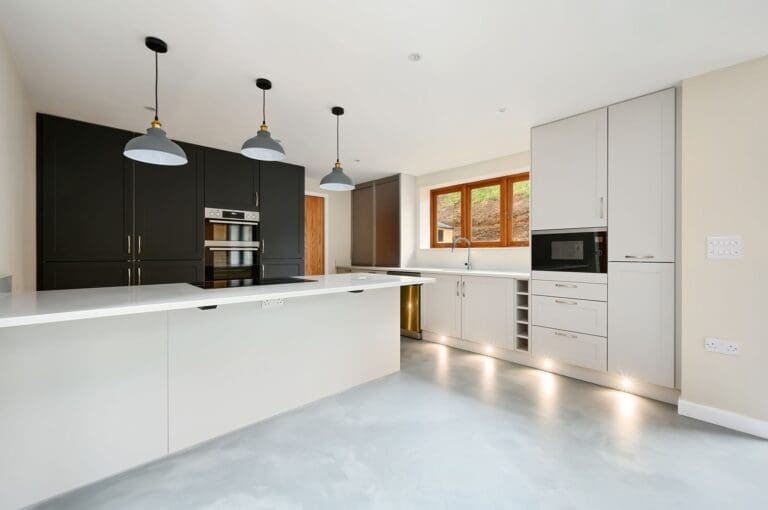
When people plan a new kitchen, the first conversations usually revolve around cabinets, appliances and finishes. The way the space works day-to-day often comes further down the list. But the layout and the floor determine far more of the day-to-day experience than most people expect. When you choose a seamless epoxy kitchen floor, those effects become even more noticeable.
In our work on domestic kitchens we see that layout and flooring decisions often drift apart, even though they shape the same daily routines. This piece focuses on domestic kitchens and where an epoxy kitchen floor genuinely supports everyday routines. If you are wondering whether an epoxy kitchen floor is practical in a busy home, the answer depends as much on the layout as on the material itself.
A kitchen always ends up doing more than cooking. It is a route through the house and a place where people gather, often linking directly with dining and living areas. The layout influences:
The floor needs to match those patterns rather than fight them. If the surface introduces small steps, raised thresholds or awkward joints, you feel it every time you move a chair or push a trolley loaded with pans. When we first look at a kitchen, we often ask people to walk us through a typical meal because that quickly shows where they hesitate, turn or bump into each other. A seamless resin surface takes those small breaks out of the picture, so layout and flooring end up tied together in practice.
In most households, people follow the same routes without thinking about them. You move from the fridge to the worktop, across to the hob, back to the sink and then towards the bin. If the space includes an island, it becomes a hub for preparation and conversation.
A continuous epoxy kitchen floor keeps those routes predictable and easy to move through. You avoid grout lines catching chair legs or collecting dirt. That can make a real difference if you use trolleys, move stools around or have family members who benefit from smoother transitions underfoot.
Because we pour the surface in place, it follows the layout rather than forcing you to design around tile sizes or plank runs. That gives the designer freedom to place islands, peninsulas and breakfast bars where they genuinely work for the layout and the way you cook and entertain.
In many of the homes we work in, the kitchen opens straight into a dining and living space. In these layouts the floor becomes one of the main tools for tying everything together. We often use a joint-free epoxy kitchen floor to create a single visual plane that runs from the cooking area to the table and on to the seating zone.
In day-to-day use, that continuity shows up in a few useful ways:
At the same time you still need clear zones. Children may do homework at the table while someone cooks. Guests may stand at the island while others sit in the living area. A continuous resin floor makes those transitions feel smooth, while careful layout keeps activities from clashing.
Every kitchen has areas that see more wear, more marks and more spills. Most homeowners we speak to want reassurance that these busy spots will cope with daily use without looking tired too quickly. These often include:
On surveys we pay particular attention to the areas in front of sinks and ovens, because that is where most hot liquids, oils and cleaning products end up.
When you choose an epoxy kitchen floor, you gain a surface without grout lines or vinyl joints in these busy spots. Oils, food spills and muddy footprints sit on the surface rather than in gaps. That makes it much easier to restore the floor to a clean state after a busy day. Day-to-day care is simple: regular sweeping and damp mopping with a mild cleaner keeps the finish consistent.
The layout still sets the limits. If the main route from garden to fridge cuts straight through a tight cooking zone, no floor can remove the sense of congestion. During planning it helps to mark likely paths and make sure there is enough clear space around sink runs, the hob and the island for people to pass without interrupting whoever is cooking.
A common concern with seamless floors is that everything will feel too uniform. In practice, epoxy systems give us a few reliable ways to create gentle zoning while keeping one continuous surface.
You can:
These changes stay subtle on purpose. The idea is to guide the eye gently without breaking the floor into hard boundaries. The result is a kitchen that still feels practical for food preparation but flows naturally into the rest of the living space.
For many homes, an epoxy kitchen floor works extremely well as long as you plan the layout and the subfloor properly. We find it works well when:
It also works in more traditional homes when you choose the right colour and edge details. In some designs, we also look at alternative seamless finishes where a different look is a better fit. For example, a soft grey floor with simple skirtings can sit comfortably under shaker-style cabinetry, while still bringing the practical advantages of resin.
It works far better when you make layout and flooring decisions at the same stage. If you leave flooring decisions until the end of the project, you may end up compromising on levels, thresholds or movement joints that limit what a resin system can offer.
An epoxy kitchen floor can be very practical, but it still needs the right preparation if you want it to perform well over time. A short check early in the design phase saves problems later.
On a typical domestic project we check:
The resin follows whatever is underneath it, so the preparation stage matters just as much as the final pour. If the substrate moves or cracks, the resin will follow. Discussing these points early with a flooring specialist helps match the system to the way you plan to use the kitchen.
A kitchen can look impressive on paper yet still feel awkward once you start using it if the routes and surfaces do not work together. We often see drawings where the cabinetry and appliances look well resolved, but the design does not align the floor build-up and movement joints with the layout. When you choose an epoxy kitchen floor and plan the layout around real habits, you can remove many of the small irritations that build up over time.
Good circulation around the island and practical appliance positions matter as much as the surface itself. When these elements line up, daily cooking and cleaning feel easier and the space starts to work the way you expect it to.
If you are planning a new kitchen or a wider refurbishment, look at cabinet design and flooring as one package. That way you can decide from the start where an epoxy kitchen floor supports your layout and where another surface might fit better. A quick discussion with our team usually clarifies what will work in your kitchen and what will not.
Experts in epoxy and polyurethane flooring systems
EV charging keeps a vehicle parked in the same position for extended periods, often overnight....
Read More