
Is a Resin Bound Driveway the Best Surface for EV Charging?
Wednesday, 25 March 2026
EV charging keeps a vehicle parked in the same position for extended periods, often overnight....
Read More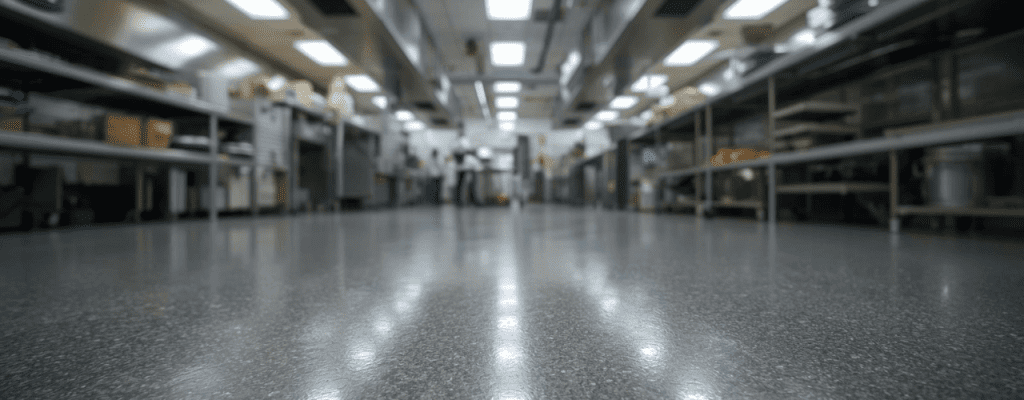
Delivery-only kitchens run hot, wet and fast. Fryer lines, wash stations and drain edges take constant punishment from heat, oil and cleaning chemicals. When flooring starts to break down in these areas, slip risk increases and prep zones can be pulled out of service. Resin Kitchen Flooring needs to hold up under that pressure from day one.
Flexflooring specialises in high-stress commercial kitchen environments where heat, grease and continuous cleaning expose weaknesses quickly. We assess fryer lines, drain detailing and substrate condition before confirming system build-up, ensuring the floor matches how the kitchen actually operates.
Resin Kitchen Flooring provides a seamless, non-porous surface that eliminates grout lines and open joints where food residue can collect. In high-output environments, hygiene management depends on cleanability. If residue settles at joints or edges, inspectors often identify it during checks.
A properly installed resin system:
In delivery-only kitchens, the priority is operational continuity. The floor must tolerate daily wash-down without degrading at fryer fronts, wash stations or bin routes where abrasion concentrates.
High-use kitchens generate sustained heat from cooking equipment while oil splashes and hot liquids contact the floor throughout service. Cleaning regimes add daily exposure to alkaline degreasers and hot water.
A resin floor for high-use kitchens should handle:
Where standard finishes break down, surfaces often soften first around fryer batteries and wash zones. Slip risk increases before visible wear appears. In contrast, hygienic resin kitchen flooring UK operators rely on provides chemical resistance and controlled surface texture, forming part of a broader commercial resin flooring approach for food production environments.
Floor failure here rarely stays cosmetic. It increases slip risk, raises hygiene non-conformance risk and may require sectional shutdown for repair. During food safety audits, inspectors commonly assess cleanability at joints, drains and wall junctions, making detailing critical.
Tiled floors depend on grout joints. Grout absorbs grease and cleaning chemicals over time. Damaged tiles create uneven surfaces that trap debris.
Vinyl systems rely on welded seams. Under heat and repeated cleaning, edges can lift or soften.
Bare concrete remains porous. Without a protective system, it absorbs contamination and becomes difficult to sanitise.
In delivery-only kitchens operating extended hours, these weaknesses become visible quickly. Resin Kitchen Flooring avoids jointed construction and reduces contamination pathways.
Most delivery kitchens operate through staggered shifts and limited shutdown windows. Installation planning must account for preparation time, cure sequencing and safe re-entry before the next service period.
When installing commercial resin kitchen flooring in Kent, confirm:
Cure chemistry does not accelerate because service pressure increases. Premature loading can weaken bond strength and shorten service life.
Phase installation carefully. Segregate work areas. Reinstate traffic only when the system reaches the required cure. This protects both the flooring system and kitchen operations.
There is no universal build-up for commercial kitchen floors. Specification depends on:
Resin Kitchen Flooring systems vary in thickness and aggregate content. Specify anti-slip aggregate around fryer lines and wash areas where wear concentrates. Match thickness and surface profile to how the kitchen actually runs. Standard build-ups often fail first at these points. For commercial kitchens, we recommend either PU screed (installed at 9mm, to allow for steam cleaning) or MMA Flake, depending on the client’s needs.
Many Kent-based delivery kitchens operate from converted retail or light industrial units. Existing slabs may contain previous coatings, patch repairs or contamination.
For commercial resin kitchen flooring in Kent, begin with substrate assessment, moisture testing and verification of load capacity near heavy equipment.
No flooring system compensates for poor preparation. Uneven falls toward drains or residual adhesive will undermine bond strength regardless of resin type. Poor detailing at drain edges often leads to early cracking where thermal movement and cleaning water combine.
Even a well-specified floor needs checking. Inspect high-use kitchens for:
Repeated repair in the same area indicates a specification or loading mismatch. If the same drain edge or fryer front requires patching more than once, reassess falls, preparation and thickness rather than applying another surface repair.
High-output delivery kitchens rely on surfaces that stay hygienic and slip-resistant under constant cleaning and heat. A failed floor can remove a prep zone from service and draw attention during inspection. Flooring decisions affect safety and service continuity.
If you are planning a new delivery kitchen or upgrading an existing unit, contact Flexflooring to review layout, loading and hygiene requirements. We will outline a practical Resin Kitchen Flooring system aligned with your operational demands and installation window.
Experts in epoxy and polyurethane flooring systems
EV charging keeps a vehicle parked in the same position for extended periods, often overnight....
Read More