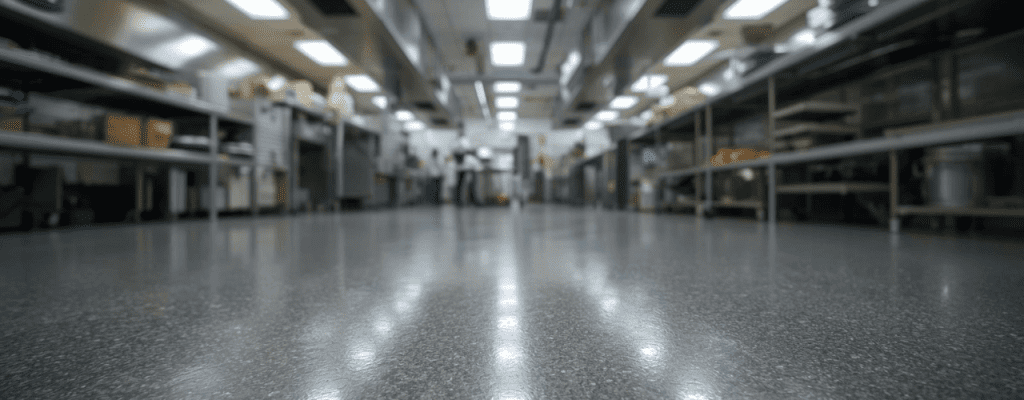
Is Resin Kitchen Flooring Keeping Up with High-Output Delivery Kitchens?
Wednesday, 18 March 2026
Delivery-only kitchens run hot, wet and fast. Fryer lines, wash stations and drain edges take...
Read More
As installers who work on site every day, we witness the financial consequences of non-compliant flooring. The floor beneath your staff’s feet is the costliest operational hazard. Managers prioritise ventilation and fire safety, naturally, but we recognise the floor presents the most immediate threat to your operation.
In an environment where grease, water, and dropped ingredients are routine, an inadequate or worn-out floor surface is a serious legal liability. If you operate a kitchen in Kent or anywhere across the UK, neglecting your flooring puts your staff at risk. It also compromises your operations and violates business compliance. For details, see our Commercial Kitchen Flooring options to stay compliant.
The key question is: are you simply repairing a cheap, temporary solution, or are you investing in a high-performance system that guarantees safety and compliance for decades?
When managers assess the commercial kitchen flooring in the Kent market, many focus on initial price. They overlook the total cost of ownership (TCO) that poor materials create.
The specification for commercial kitchen flooring by the Health and Safety Executive (HSE) specifies clear guidelines regarding flooring in food preparation areas. Employers maintain a legal Duty of Care to ensure the working environment remains safe. If a worker suffers an injury due to non-compliant flooring (e.g., inadequate R-rating or poor drainage), the employer may be found negligent. This leads to massive legal exposure.
Commercial kitchens require completely impervious commercial kitchen flooring to meet safety standards. Traditional options often create dangerous hygiene traps:
If your kitchen relies on deteriorating tiles or worn vinyl, your facility is already at risk of contamination and regulatory action.
Secure a no-obligation quote today to upgrade to mandatory seamless PU screed.
The specification for safety, hygiene, and endurance demands a commercial kitchen flooring system far stronger than standard commercial vinyl or ceramic tile. Professional food preparation mandates polyurethane (PU) screed and heavy-duty epoxy systems.
For security in a busy restaurant or industrial catering facility, we recommend a PU Screed (Polyurethane Screed) system. Installed by an experienced team in Kent, PU Screed offers unparalleled benefits:
Commercial flooring must meet specific, verifiable standards, not just a general slip resistance requirement. Often specified at R12/13 (DIN 51130 or verified via a Pendulum Test Value (PVT) of dry >50 / wet .40, these ratings will reduce staff injury and ensure regulatory compliance.
Standard tiles or deteriorating vinyl can rarely maintain these high ratings long-term. Resin systems, however, are formulated specifically for this purpose. We do not just pour the floor. PU screeds include custom aggregates to increase slip resistance and distinguish a compliant floor for a liability.
Safety does not conclude with a non-slip surface; it requires effective water management. If liquid pools, the system fails. Standing water dramatically increases slip hazards and creates ideal breeding grounds for bacteria, including Listeria.
To combat this, a compliant non-slip kitchen floor installation must incorporate engineered falls, precise slopes built into the sub-base. These direct all liquid flow directly towards designated stainless steel drains. We trowel-apply the resin screeds by hand, allowing our skilled installers to tailor these seamless slopes. Designed falls therefore help direct liquids to drains and minimise standing wate. It is the final component of the hygienic, self-draining system.
The preparation determines the effectiveness of the PU screed. We frequently see contractors rush the substrate prep or mis-mix the resin, which provides a six-month service life, not a twenty-year investment. When you buy commercial kitchen flooring for restaurants, you are purchasing the installer’s experience in material chemistry and regulatory compliance and the long-term guarantee that backs it up.
Flexflooring offers a dedicated, fully accredited service for non-slip kitchen floor installation Kent businesses can rely on. Our process ensures longevity and compliance:
Don’t wait for an injury report or the local health authority’s failed inspection report. A quality resin floor is an essential long-term investment that shields your team, safeguards your reputation, and secures your compliance record.
Don’t delay risk mitigation. Get a free quote today for compliant, heavy-duty commercial kitchen flooring installation.
Experts in epoxy and polyurethane flooring systems
Delivery-only kitchens run hot, wet and fast. Fryer lines, wash stations and drain edges take...
Read More