Is Resin Kitchen Flooring Keeping Up with High-Output Delivery Kitchens?
Wednesday, 18 March 2026
Delivery-only kitchens run hot, wet and fast. Fryer lines, wash stations and drain edges take...
Read More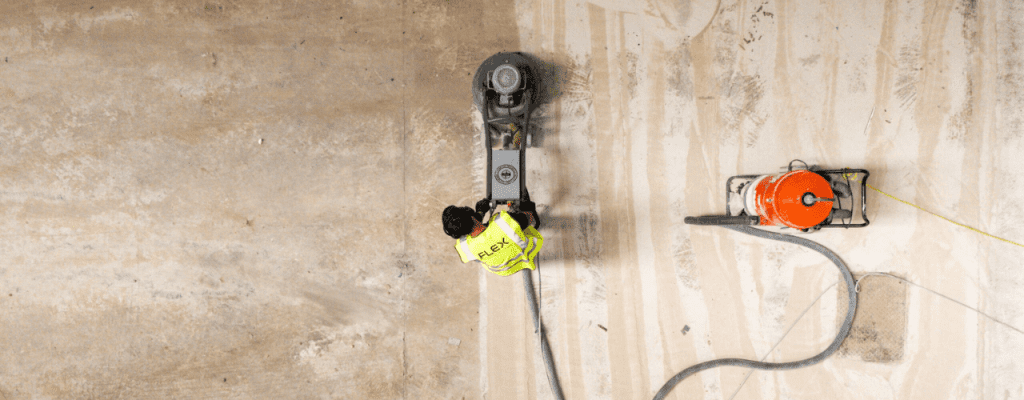
If you manage a warehouse, distribution centre or cold store, your floor moves as temperatures change. Concrete expands in heat and contracts in cold conditions. You see the effects at thresholds, dock plates and long bay joints where traffic crosses between temperature zones. When reviewing new warehouse flooring systems, factor that movement into the specification from the outset. Specify the wrong system and cracking follows. Costs rise. Operations slow.
Heat expands the slab. Cold contracts it. The resin above must absorb that movement. If it cannot, cracks and bond failure develop at restraint points.
In large bays, seasonal shift places measurable stress on joints and saw cuts. Repeated fluctuation accelerates damage. Solar gain raises surface temperature above ambient levels, particularly near south-facing doors and open loading bays. Cold storage reduces flexibility in rigid materials. Forklift traffic increases stress where temperature zones meet.
Surface damage rarely spreads evenly. You see it first at transitions. Fine cracking forms. Edges lift at joints. Traffic widens the defect.
Thermal shock describes rapid temperature change across the slab. It occurs at cold store entrances, dock doors and washdown areas.
Rigid coatings fracture where movement cannot dissipate. Most failures begin at saw cuts, construction joints or door thresholds. Under load, those cracks extend.
(PU) Screed absorbs movement more effectively than standard epoxy because it offers greater elasticity under thermal cycling.
Failure rarely appears across the whole floor at once. It starts at a joint, a threshold or a transition between temperature zones. Cracks widen under traffic. Moisture tracks beneath the coating. Bond loss spreads from the original restraint point.
Localised defects become sectional repairs. Sectional repairs restrict traffic. In busy facilities, that restriction affects picking routes, racking access and dispatch flow. If water penetrates beneath the resin, freeze–thaw cycles accelerate deterioration in cold areas.
Early intervention limits reinstatement to a small area. Delay allows the defect to migrate across a full bay.
Epoxy performs well in stable environments. It offers high compressive strength and abrasion resistance. In temperature-controlled warehouses with minimal fluctuation, it remains a practical solution.
In fluctuating environments, rigidity becomes a constraint. Repeated thermal cycling exceeds epoxy’s movement tolerance. Fine cracking appears first at joints and thresholds, then progresses under traffic.
Review typical epoxy resin flooring specifications before selecting a system. Confirm sustained surface temperature, cleaning method, proximity to external doors, forklift type and racking load. Check slab moisture and installation temperature. Allow full cure before reinstating traffic. Early loading shortens service life.
Polyurethane provides flexibility under load. It reduces shear stress at joints and saw cuts. In sub-zero conditions, it maintains performance where rigid systems struggle.
See technical guidance on polyurethane flooring systems.
Polyurethane tolerates washdowns and transition between cold and ambient zones. It suits environments that operate across temperature ranges during a single shift. Thickness, preparation and curing still matter. Monitor dew point. Confirm substrate temperature. Do not reinstate traffic before the system reaches strength.
Some warehouses sit between stable and extreme conditions. A distribution centre may operate at ambient temperature but expose loading bays to winter cold and summer heat. Washdowns may occur weekly rather than daily. In these crossover environments, the decision requires closer scrutiny.
Epoxy can perform where temperature change remains gradual and controlled. Once traffic moves repeatedly between cold and ambient zones, thermal cycling increases. Under those conditions, polyurethane systems provide greater tolerance to movement and reduce joint stress.
Base the decision on measured exposure, not assumption.
Cold storage demands controlled installation and flexible systems. Sub-zero temperatures increase fracture risk. Condensation increases slip risk. Slabs in chilled environments retain moisture longer than ambient spaces.
Most operators select polyurethane screeds in these settings because they combine flexibility with mechanical strength. Seamless finishes reduce moisture ingress. Slip-resistant textures improve underfoot safety. Flexible joint detailing accommodates slab movement.
Sequence works carefully. Test moisture. Coordinate with refrigeration and main contractors. Review comparable industrial flooring case studies before committing to specification.
Heat from sunlight and machinery raises surface temperature. Loading bays and open door lines show early stress. Prolonged exposure softens some resin formulations and weakens adhesion.
Evaluate sustained exposure, not short spikes. Confirm substrate temperature during installation. Polyurethane and cementitious systems handle heat and steam more consistently than rigid coatings in high-load environments.
Performance depends on slab condition and joint integrity as much as resin choice. In heavy vehicle environments or areas subject to high static racking loads, we inspect the concrete base to ensure its integrity and can diamond grind the base to ensure a smooth base to install onto. This provided additional structural support beneath the resin layer. Keep expansion joints functional and free from infill that restricts movement. Test moisture before coating. Repair structural cracks before application.
Preparation on industrial flooring projects typically includes mechanical surface preparation, moisture testing, joint repair and slab flatness verification. Review drawings. Inspect joint layout. Confirm access constraints before finalising specification.
Traffic does not slow when coatings fail. Markings must tolerate load and movement without delaminating.
Confirm compatibility between the base resin and the line marking system. Install markings only after the primary system reaches full cure.
Inspect thresholds, cold store entrances and dock transitions first. Look for fine cracks near movement lines. Check for lifting at joints. Monitor blistering in traffic lanes and discolouration in heat-exposed zones. Repeated repair in the same location signals a specification issue rather than isolated wear.
Address early defects before they spread across a full bay.
Inspect transition points as part of routine maintenance. Check joints at dock doors and cold store entrances. Record recurring crack patterns and lifting at the same locations.
Review repair history. Repeated patching in identical zones indicates specification stress rather than random damage. Confirm that joint sealants remain flexible. Verify that traffic has not shifted into new loading patterns that increase local stress.
Monitoring movement allows you to intervene before defects expand into larger reinstatement areas.
Start with operating temperature range and rate of change. Walk the site. Stand at transition points. Observe traffic patterns across shifts. Review cleaning regimes and washdown intensity.
Evaluate temperature extremes, traffic load and external exposure together. Base the decision on operational data. Match the system to site conditions.
Align specification with real operating conditions. If you plan refurbishment, expansion or defect remediation, secure technical input early.
Arrange a structured site assessment.
Experts in epoxy and polyurethane flooring systems
Delivery-only kitchens run hot, wet and fast. Fryer lines, wash stations and drain edges take...
Read More