
Is Resin Kitchen Flooring Keeping Up with High-Output Delivery Kitchens?
Wednesday, 18 March 2026
Delivery-only kitchens run hot, wet and fast. Fryer lines, wash stations and drain edges take...
Read More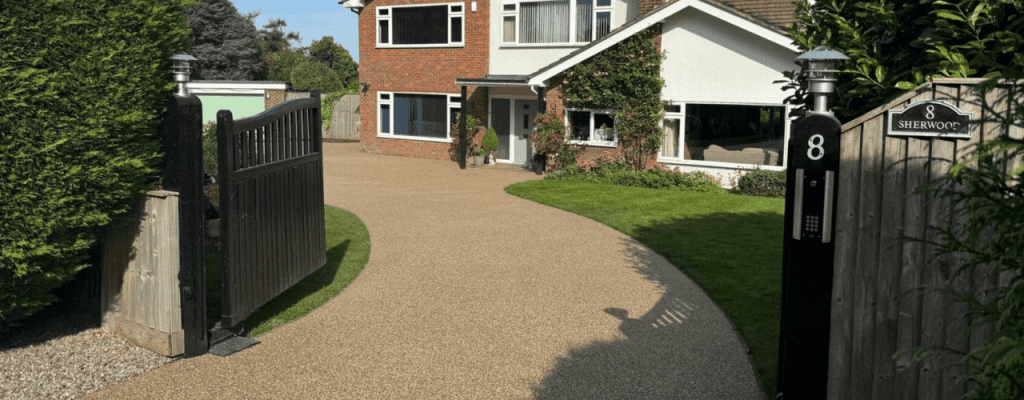
EV charging keeps a vehicle parked in the same position for extended periods, often overnight. Sustained static load and repeated steering into the charging bay concentrate pressure in one section of the driveway. Drainage performance also becomes more critical when electrical equipment sits directly above the surface.
Fortunately, FLEX have the industry leading solution with our Resin Bound Stone System Supplied by Vuba. The system we install, includes Resin Bound aggregate, VubaMac and SRM to offer the most flood resistant paving solution in the world. The system also has a 57% higher flexural strength than asphalt.
Check base condition and drainage before cutting into the driveway for an EV charger.
EV ownership changes how people use their driveways. Many drivers park in the same position each evening to connect the charger. That repetition increases localised loading where tyres sit and steering adjustments occur.
EV batteries add weight compared with many petrol vehicles. Most domestic EVs still fall within normal passenger vehicle limits, but parking in the same position concentrates stress in one section of the driveway.
Any resin bound driveway EV charging installation must account for sustained static loading and drainage performance. Sub-base depth, layered compaction and secure edge restraint determine whether the surface remains stable beneath the parked tyre position over time. Most long-term movement traces back to what sits beneath the resin layer, not the resin itself.
With a properly prepared base, a resin bound driveway reliably handles domestic EV traffic. The bound aggregate layer over a stable, well-prepared base gives the system its strength. VubaMac is a flexible and highly durable environmentally friendly base designed for resin bound surfacing. Unlike alternative bases which are not designed for resin bound, VubaMac will form a monolithic bond with the resin bound surface when applied within the advised intercoat period; creating the first ever fully functional resin bound surface. The complete VubaMac system (including resin bound surface course) is installed at 36mm for Pedestrian Traffic and 50mm for Vehicular Traffic.
Structural performance depends on:
Where base preparation is weak, rutting and settlement can appear first beneath the front tyre position or along the steering arc into the charging bay. Assess the driveway build-up for EV charging as a full system, not just a surface layer.
If you are planning EV charging at home and want clarity on base condition, drainage and specification before committing, speak to Flexflooring. We can review your existing driveway layout and confirm whether reinforcement, excavation or full replacement is required before installation.
Installing a home charger often requires trenching for electrical cabling. Cutting into an existing surface and reinstating it introduces potential weak points if detailing is poor.
When integrating a charger with a resin bound driveway, contractors should:
Cracking can develop along the trench line where reinstatement meets the original bound surface. If installers do not compact reinstated sections in layers, that joint often becomes the first visible weakness around the charger base, which can lead to early remedial work if left unaddressed. The trench line can reveal movement before the rest of the driveway shows any sign of stress.
The best resin bound driveway for EV home charging takes charger positioning into account before installation begins, avoiding unnecessary future cutting.
A resin bound driveway allows water to drain through the surface when installed over a suitable permeable base, directing rainfall into the sub-base instead of across the driveway or into the highway. Crafted with innovative permeability technology, VubaMac stands as the most flood-resistant paving in the world, ensuring durability and sustainability.
For EV owners, this matters in two ways. First, many front garden conversions require permeable surfacing to comply with planning guidance. Second, effective drainage reduces standing water near electrical equipment.
Build a permeable resin driveway for EV use with a compatible sub-base and sufficient depth to maintain drainage performance. A permeable resin driveway for EV owners UK must continue to drain effectively beneath the charging bay as well as across the wider surface. Surface permeability alone does not guarantee compliance. If the sub-base beneath it does not support drainage, water can track sideways and settle against edges or near the charger plinth.
There is no universal specification for every property. Ground conditions, existing slab type and drainage layout all influence the final design.
For residential EV use, specification should consider:
In Kent and South East England, clay soils demand careful excavation and base preparation when installing a resin bound driveway for electric vehicles. On heavier ground, inadequate excavation or insufficient sub-base depth can lead to seasonal movement, so drainage strategy and base construction determine long-term stability.
Flexflooring designs a resin bound driveway for EV charging with a structural-first approach. We assess ground conditions, drainage strategy and charger position before confirming specification, so the driveway performs under sustained parking and turning pressure.
Our resin bound driveway service delivers a full build-up rather than a surface upgrade. We manage excavation depth, layered compaction and edge restraint to ensure stability beneath the parked tyre position, reducing the likelihood of settlement once the vehicle returns to daily use.
Where EV chargers require trenching, we plan reinstatement and drainage falls from the outset. We compact reinstated sections in layers and align falls away from the charger plinth to reduce the risk of cracking or water pooling around electrical equipment.
This process gives property owners a driveway designed around EV use, not adapted to it after installation.e
Surface failure rarely begins in the middle of the driveway. It usually shows first at the repeated parking position or along the turning line into the charging space.
Common causes include:
Under repeated EV parking, minor movement at these points can widen over time if the underlying base lacks stability. The resin surface cannot compensate for a weak or poorly compacted base. Proper preparation prevents small defects from turning into larger structural repairs.
Like any driveway surface, resin bound systems need occasional inspection to maintain appearance and performance. For EV owners, attention should focus on the charging area where tyres repeatedly rest.
Check periodically for:
Cleaning with appropriate methods helps preserve the surface without damaging the resin matrix.
When planning a driveway for EV charging, focus on structure before appearance. Preparation, drainage and charger position determine how the surface performs once the vehicle sits in the same spot every night.
If you are installing a home charger or upgrading your driveway for electric vehicle use, contact Flexflooring to review ground conditions, layout and specification. We will assess the existing base, confirm drainage strategy and define a driveway build-up suited to your charger position and long-term EV use.
Experts in epoxy and polyurethane flooring systems
Delivery-only kitchens run hot, wet and fast. Fryer lines, wash stations and drain edges take...
Read More