When Should Playground Flooring Be Repaired or Fully Resurfaced?
Wednesday, 14 October 2026
Common visible problems on school and public playgrounds include splits, worn areas and damaged edges....
Read More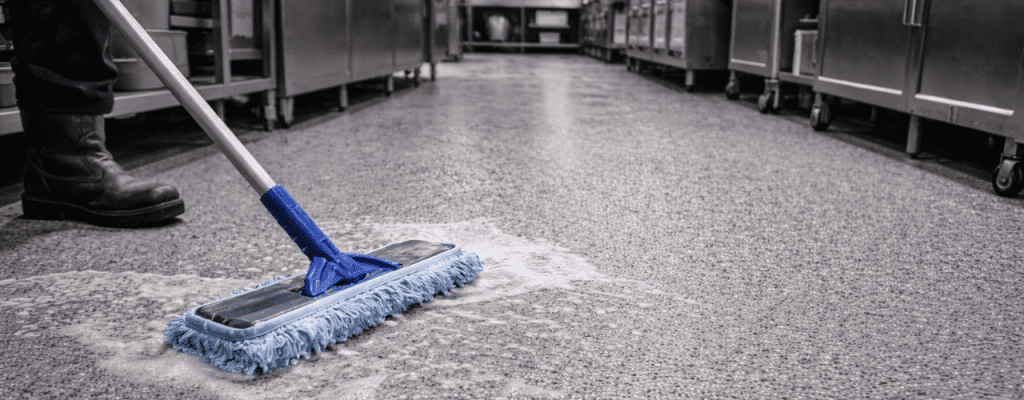
Closing time in a professional kitchen involves immediate, heavy cleaning. Kitchen staff use high-pressure hoses and alkaline degreasers to strip grease from every surface. Standard floor finishes often fail under the combined stress of boiling water and aggressive scrubbing.
At FLEX, we have spent over 15 years installing high-performance commercial resin flooring systems that exceed the rigorous demands of the UK food and beverage industry. Choosing a specialist system is a basic operational requirement to maintain safety, hygiene, and long-term durability.
Traditional floor materials like ceramic tiles degrade when daily washdowns allow moisture to penetrate grout lines. This water ingress causes tiles to de-bond from the substrate and creates damp pockets where bacteria multiply. Constant exposure to moisture eventually leads to full structural failure of the floor system.
Standard kitchen surfaces cannot handle the chemicals required for food safety. Staff use heavy-duty degreasers to break down animal fats, which strip away topical sealants. Once the protective layer fails, the porous concrete beneath absorbs liquids and contaminants.
Temperature changes also cause significant damage during the cleaning cycle. Boiling water from stovetops or steam cleaners creates thermal shock that cracks rigid materials. When a floor cannot expand, it fractures and allows contaminated water to pool underneath the surface. Seamless commercial resin flooring removes these risks by eliminating joints and porous areas.
A failing floor is the most common reason for a downgraded hygiene rating during unannounced EHO inspections. Pitted concrete or cracked tiles harbour bacteria that standard washdowns cannot reach. If your floor is showing signs of erosion, book a priority compliance survey to ensure your facility remains audit-ready.
A wet kitchen floor requires an engineered texture to provide grip during active service and cleaning. We mix specific aggregates into the resin to provide slip resistance even when the floor is covered in soapy water or oil. This texture is vital for maintaining a safe workplace in high-moisture zones.
Effective commercial resin flooring must stay safe without becoming impossible to clean. If the surface is too aggressive, mop fibres tear and dirt gets trapped in the profile. We calibrate the aggregate size to find the right balance between friction and hygiene. Our installers apply these systems by hand to ensure the non-slip particles are spread evenly across the entire room.
The recommended flooring systems, including MMA flake and PU screed, are specifically designed to deliver long-lasting slip resistance in demanding environments. The textured finish is built into the surface during installation, creating a durable grip profile that remains effective over time. Regular cleaning with mechanical scrubbers or stiff brushes will not compromise this finish. As a result, the flooring continues to support compliance with health and safety transition requirements long after installation.
Selecting the right floor depends on your specific cooking temperatures and cleaning methods. Our technical team looks at your daily foot traffic and equipment loads to recommend a commercial resin flooring formulation. While both are durable, they react differently to heat.
Polyurethane is the superior choice for areas facing thermal shock from ovens, fryers, or steam cleaning. The material expands and contracts at a similar rate to the concrete subfloor, preventing delamination. Heavy-duty polyurethane screeds remain stable even when hit with boiling water spills or high-pressure steam deep cleans that is why we recommend PU screeds for this environment.
Epoxy flooring systems offer high compressive strength for storage areas and prep zones with heavy equipment. This material handles the weight of loaded trolleys and stainless steel tables without indenting. However, epoxy is more rigid than polyurethane, meaning it can crack if exposed to sudden, extreme temperature spikes.
Installing commercial resin flooring requires specialist surface preparation to ensure the system bonds to the concrete. To capture maximum durability, we follow a strict multi-stage process:
Daily washdowns require a floor that acts as a single, impermeable unit. Traditional tiles often fail because the joints cannot handle constant water and chemical exposure. An upgrade to high-quality commercial resin flooring removes these weak points and keeps the facility compliant with food safety standards.
FLEX has installed heavy-duty resin systems across the UK. You can view our performance standards in our latest case studies. We can assess your current floor to identify where water is pooling or where grout is eroding. Contact us today for a technical site survey to secure your installation date.
A professional commercial resin flooring screed typically lasts over ten years in a busy kitchen environment. The lifespan depends on the thickness of the system and the frequency of heavy chemical cleaning. Avoid using metal scrapers, as these can gouge the surface over time.
Yes, polyurethane is designed for thermal cycling and handles boiling water without cracking. The material is flexible enough to absorb the shock of sudden temperature spikes near boiling pans. This makes it more resilient than epoxy in cooking suites.
Seamless floors are significantly faster to clean because there are no porous grout lines to trap bacteria. Cleaning teams can push water and degreaser directly into the drains with a squeegee. This eliminates the need for detailed scrubbing of tile joints.
Experts in epoxy and polyurethane flooring systems
Common visible problems on school and public playgrounds include splits, worn areas and damaged edges....
Read More