Why Warehouse Flooring Breaks Down at Racking Legs and Aisle Junctions
Wednesday, 11 November 2026
Warehouse flooring rarely wears evenly. Racking positions create concentrated load points on the slab, while...
Read More
Resin bound patios can work well in small courtyard gardens where one continuous surface needs to connect a seating area, narrow side return or path. The key issue is how the existing base, levels, drainage, thresholds and access affect what can be installed.
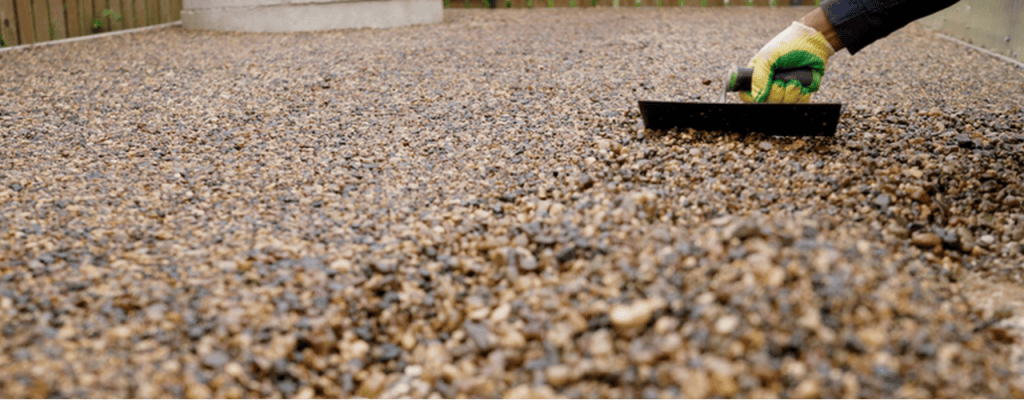
Our Resin Bound Stone is mixed on site and hand or power trowelled, so it can follow curves, corners and changes in width without introducing the same pattern of joints as unit paving. That can give a compact courtyard a more consistent surface, but it cannot correct an unstable base or poorly planned drainage.
For homeowners considering resin bound patios, the key questions are straightforward: can the existing patio support an overlay, will the new levels work properly at doors and drains, and does the courtyard need a new build-up first? At FLEX, we can assess those conditions before you commit to the work, so you know what can stay, what needs to change and which Resin Bound Stone build-up suits the space.
A site assessment can help establish if an overlay or new build-up is appropriate and identify the drainage, access and edge details that need to be resolved first.
Small courtyards often pack back doors, drains, planters, storage routes and changes in width into a limited area. A poorly positioned edge or level change is therefore more noticeable and can make the route between the house, seating area and side return less comfortable to use.
Rather than treating each part of the courtyard as a separate surfacing job, we assess how the whole space needs to work. Where the base and levels are suitable, a hand-trowelled resin bound surface can link those areas with fewer visual breaks and a more consistent route through the garden.
Yes. Resin Bound Stone can follow curved borders, irregular outlines, corners and changes in width because the material is mixed and trowelled on site. This gives our installers more flexibility around irregular edges and changes in width without relying on individual paving units.
Shape alone does not decide suitability. We check the substrate, available depth, access, drainage and finished levels so you know if the existing patio can be retained or if the build-up needs to change before the finish is chosen. That avoids designing around the appearance first and discovering later that the levels or drainage do not work.
Yes, Resin Bound Stone can create one consistent surface across a patio, connecting path and side return where the levels and build-up are compatible. Using the same aggregate blend through these areas can reduce visual interruptions and give the route a clearer sense of continuity.
You should still be able to reach inspection covers, drains and steps without the patio feeling like a collection of separate patches. We plan those details into the layout before installation so the Resin Bound Stone can connect the usable areas while keeping everything that needs access practical.
Not automatically. A continuous surface can reduce visual interruption across the floor area, but the size and feel of a courtyard still depend on its proportions, planting, furniture and surrounding walls.
In a small courtyard, too many changes in colour or surface treatment can make the floor area feel more broken up. Using one restrained aggregate blend gives seating and walking areas a consistent backdrop and makes it easier to coordinate the patio with doors, planters and furniture. We can help you choose a Resin Bound Stone blend that suits the space without suggesting that colour alone will make the garden look larger.
Yes. Because Resin Bound Stone is troweled on site, our installers can work the surface around curved borders, raised beds and other fixed features where the edge details and finished levels allow it. That means the patio can follow the shape of the courtyard rather than forcing the layout into a rigid pattern, provided the drainage route and build-up are suitable.
Doors, steps, drains, taps and inspection covers still need to work normally once the patio is finished. In a small courtyard, one poorly planned level or edge can leave a drain awkward to access, a tap difficult to use or a doorway with an uncomfortable transition. We plan these fixed details before installation so the Resin Bound Stone can be detailed around them while keeping everyday access and drainage practical.
Sometimes. Some existing concrete or paved patios may be suitable for overlay, but the substrate needs to be assessed first. It must be structurally sound, stable, suitably drained and compatible with the resin bound system. Where paving is loose, moving or holds water, covering it with resin does not remove the underlying problem.
We assess movement, drainage, finished levels and the condition of the existing surface before recommending the route forward. That gives you a clearer answer on if the existing patio can genuinely be retained before you commit to the finish. Our guidance on VubaMac and Vuba SRM explains why the layers beneath the resin finish matter when the existing construction cannot simply be retained.
In a small courtyard, the finished patio level can make a noticeable difference at back doors, steps and drains. If the surface meets a doorway badly or water has nowhere sensible to go, you can end up with an awkward step, standing water near the house or drainage points that are harder to access.
You should not need to work out falls, threshold heights or drainage details yourself. We assess the existing levels, door thresholds, channels, gullies and inspection covers before recommending the build-up. That tells us if the existing patio can be retained, if an overlay is suitable, or if the levels need to change first.
If the patio already holds water or sits awkwardly against the house, that is something we want to understand before the resin is installed, not after it. Resolving the cause at this stage is more useful than trying to work around the problem once the finished surface is in place.
If the existing patio is uneven, holds water or sits awkwardly against the house, get in touch with us for a site assessment. We can review those conditions before recommending the build-up, so you have a clear route forward before work begins.
They are relatively low maintenance rather than maintenance-free. Regular sweeping removes leaves and loose debris, while occasional washing can keep the surface clear and presentable.
Because the stone is bound within the resin, there is no loose aggregate to redistribute across the courtyard. Routine care should still respond to the site, especially where leaves, dirt or other debris collect in corners and around planters.
We start by working out what can realistically stay and what needs to change. If the existing patio is suitable for overlay, retaining it may avoid unnecessary reconstruction. If it is unstable, poorly drained or leaves the finished level in the wrong place, we can recommend a different build-up before you commit to the work.
We also look at doors, drains, edging, planters and access together so the finished patio works as one usable courtyard rather than solving one detail and creating a problem somewhere else. Where a full Resin Bound Stone construction is appropriate, our preferred build-up includes a compacted MOT Type 3 sub-base, a VubaMac structural base layer and Vuba SRM in accordance with the project specification. The finished resin bound layer is mixed on site and hand or power trowelled to the specified depth.
We have been installing patios for over 12 years. The aim is to recommend the build-up and finish that suit the way you need the courtyard to work, rather than forcing a standard detail into an awkward space.
If a compact courtyard has awkward levels, restricted access or an existing patio you hope to retain, request a site visit and quote. We can assess the base, drainage, thresholds and layout before recommending an overlay or new build-up.
Experts in epoxy and polyurethane flooring systems
Warehouse flooring rarely wears evenly. Racking positions create concentrated load points on the slab, while...
Read More