Can Commercial Epoxy Flooring Be Repaired Without Recoating the Whole Area?
Wednesday, 4 November 2026
Commercial epoxy flooring can sometimes be repaired locally without recoating the whole floor. The right...
Read More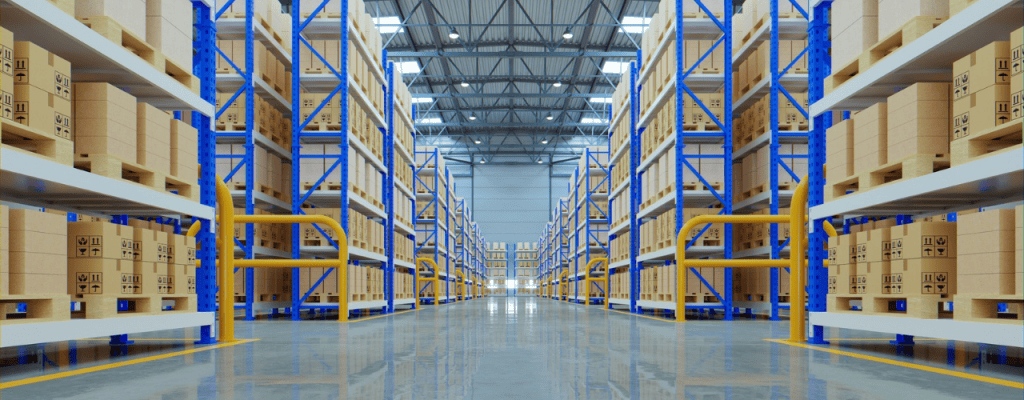
Warehouse flooring rarely wears evenly. Racking positions create concentrated load points on the slab, while aisle ends and junctions take repeated forklift braking, turning and wheel traffic. Damage can appear in these high-demand areas while the surrounding floor still looks serviceable.
Local cracking, exposed concrete, worn coatings and damaged joint edges show where closer assessment is needed. The main questions are how far the damage extends and what it means for repair scope, access and future performance.
At FLEX, we assess the damaged area alongside the existing floor, traffic routes, loading points and available downtime before recommending a local repair, phased work or a wider flooring upgrade.
Warehouse flooring often shows early wear in areas where traffic, turning and repeated wheel movements are concentrated. Aisle ends, junctions and forklift turning points can deteriorate faster than quieter parts of the floor because the same small areas take repeated braking and changes of direction.
Loading doors, pallet-transfer points and busy floor joints are also common areas for localised damage. Racking positions can develop their own pressure points around uprights and base plates, while locations that have already been repaired may show repeat deterioration if the underlying issue extends beyond the visible defect.
This is why warehouse floor damage is often local rather than uniform. Open bays may still look serviceable while heavily used routes and fixed loading points show the first clear signs of wear.
Racking creates concentrated, sustained loading points at the uprights and base plates. Cracking, coating loss or repeat repairs around these positions therefore deserve attention, particularly when nearby flooring remains sound.
The visible defect does not prove the cause. Damage may relate to the concrete, existing flooring build-up, previous preparation, movement or another site condition. Rack anchors and fixings are also local details to assess, but their presence does not automatically mean they caused the failure.
In some cases, yes. If the damage is contained and the area can be safely accessed and prepared, a local repair may be possible around existing racking.
Racking can restrict access around base plates, edges and fixings, so the scope depends on the extent of deterioration, safe segregation and the available curing window. If damage extends farther, a wider repair area may make more sense than repeatedly patching the visible defect.
Braking, steering and repeated changes of direction concentrate wear in the same small areas. A forklift travelling in a straight line does not place the same demands on the surface as one repeatedly turning at an aisle end or junction.
Worn coating, exposed concrete or repeat damage in the same turning zone can justify closer assessment. The review should also consider how frequently vehicles turn or brake there, because a busy junction may place different demands on the floor from a lightly used bay. After the site review, that area may need a different repair or resin build-up.
Visible damage does not identify the repair system by itself, but it does show where the floor needs closer assessment. Common signs include:
These signs show where further assessment is needed. They do not determine the repair system on their own.
The repair scope depends on how far the damage extends and the condition of the surrounding floor.
At FLEX, we use the survey findings to set the extent of work and match the flooring system to how the area is used. If you are seeing repeat damage in the same warehouse areas, get in touch with us and we can review the affected floor, operating conditions and repair options before you commit to another local patch or a wider upgrade.
Repeated forklift and pallet-truck crossings place concentrated wheel traffic across joint edges, especially where a joint runs through a busy aisle or turning area. If a joint edge is already damaged, continued crossings can enlarge the defect.
Different joint types serve different purposes, so a repair should respect the existing detail rather than simply cover it. We look at joint-edge condition, previous repairs and the way traffic crosses the area before recommending the repair.
There is no single specification for every high-traffic warehouse area. The existing concrete, traffic, impact, cleaning regime and available shutdown all influence the system. A resin finish relies on a sound, properly prepared base, and a coating cannot correct ongoing structural movement. The aim is to match the build-up to the conditions the floor actually has to withstand, rather than selecting a system on traffic volume alone.
Where conditions suit the system, our epoxy coatings and self-levelling systems can provide a hard-wearing finish for foot and forklift traffic. A polyurethane build-up may suit areas with heavier impact, wet cleaning, chemical exposure or temperature change. MMA may be considered where the closure window is short.
Different warehouse zones can therefore justify different build-ups. The specification should follow the condition of the floor and how each area is used, rather than assuming one system must cover every square metre.
A FLEX manufacturing workshop project shows how an industrial floor can also be planned around traffic movement. Across 108 m², green and yellow epoxy was used to define walkways, bays and crossing areas, giving the site clearer separation between working and pedestrian routes.
They can in some warehouses if individual work areas can be safely isolated and alternative access remains workable. The programme still needs enough time for preparation, installation and curing.
Where parts of the building must stay operational, we can plan warehouse flooring around live traffic routes around safe segregation, alternative access and the curing window. Weekend or shift-based work may suit some sites. If repairs affect marked routes, line marking or demarcation can be reinstated after the flooring work.
You do not need to diagnose the floor before contacting us. We assess how far the damage extends, the condition of the existing floor and the way the affected area is used. We also look at racking, turning points, loading areas, access and the available shutdown window before recommending the repair scope.
That may lead to a local repair, partial recoating, a different build-up in a high-demand zone or a wider flooring upgrade. If there are concerns about the structural capacity of the slab beneath racking or other concentrated loads, separate structural advice may also be needed.
At FLEX, we can assess the damaged areas, operating conditions and available downtime before recommending the repair scope or flooring system. If you are planning warehouse flooring repairs in Kent or the surrounding area, request a site assessment or quote and we can discuss how to plan the work around your warehouse operation.
Experts in epoxy and polyurethane flooring systems
Commercial epoxy flooring can sometimes be repaired locally without recoating the whole floor. The right...
Read More