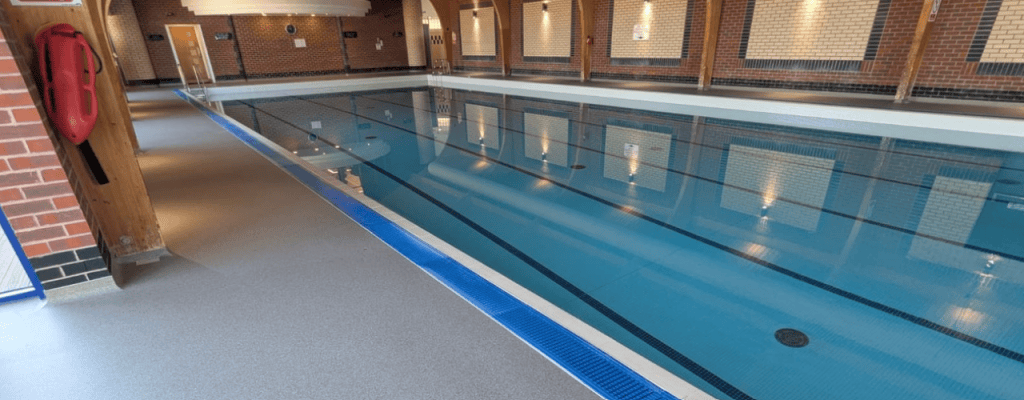
Can an Old Pool Surround Be Resurfaced Without Removing the Whole Existing Surface?
Wednesday, 21 October 2026
If your pool surround is looking dated or becoming uneven, replacing the entire area may...
Read More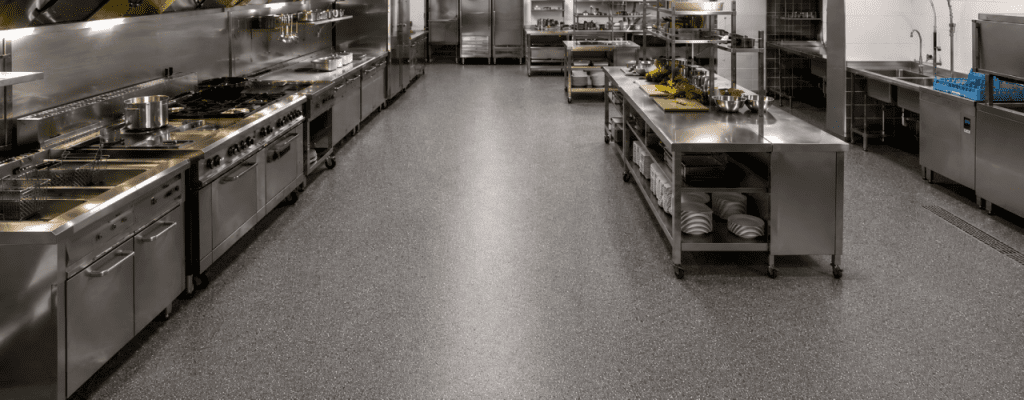
Grease hotspots create safety and hygiene problems fast, which is why commercial kitchen flooring needs careful specification.
Fryer lines, wash stations and prep areas take the heaviest mix of grease, water, cleaning chemicals and foot traffic. These are the parts of the kitchen where standard floors usually start to struggle first. Seamless polyurethane and resin systems are easier to clean and tend to hold up better under these conditions.
“Our commercial kitchen flooring systems are created specifically to withstand heat, chemicals and the constant cleaning that is required in such busy areas.” Katie Pepper Business Development Director.
Our installers at FLEX assess these zones before work begins, so we can specify a flooring system that fits the way the kitchen is actually used.
Grease hotspots become dangerous quickly once cooking fats start mixing with wash water and cleaning chemicals. Staff then carry that contamination across the kitchen under constant foot traffic.
The Health and Safety Executive identifies slips as a major risk in food preparation areas. A floor can look safe when dry, but oil and washdown water quickly change how it feels underfoot. Slip-resistant commercial kitchen flooring helps reduce that risk in the areas where grease builds up fastest.
In many commercial kitchens, early failure often appears beneath fryer lines and busy pot wash stations. These zones deal with boiling water, cleaning chemicals and repeated heat.
Heat and moisture wear down standard flooring materials over time. Traditional tiles can lift and crack when hot fat or boiling water hits a cooler surface.
Once joints start to fail, water gets into the floor and the damage spreads. Dropped equipment can make the problem worse. Seamless resin flooring removes these weak joints and helps stop water getting into the floor.
If joints are already opening up around fryer lines or wash areas, the problem usually gets more expensive once water starts getting below the surface.
Contact us for a free site assessment. We can identify the worst failure points early and help you plan repairs or replacement before downtime becomes harder to control.
Slip-resistant commercial kitchen flooring gives staff better grip when floors are covered in oil and water. The texture needs to provide traction without making the floor too hard to clean. A well-specified surface helps staff keep their footing without making daily washdown harder.
This is where specification matters. If the floor is too smooth, it becomes dangerous when wet. If the texture is too heavy, cleaning becomes slower and harder. Polyurethane screed systems can solve this by combining grip with cleanability. That helps staff keep their footing while still pushing water into the drainage system during washdown.
Hygienic resin flooring makes cleaning easier by removing the joints where grease and bacteria build up. A seamless surface makes it easier to move hot water and cleaning chemicals across the floor without trapping food debris in gaps.
Food businesses need cleaning routines that are simple and reliable. Traditional tiled floors create small grease traps across the room, so staff spend more time scrubbing weak points. A poured resin surface gives teams less to scrub around during daily washdown.
Good drain detailing helps stop water from pooling and reduces grease build-up around weak points. Correct falls help liquid move towards the drain, while proper sealing helps protect the join between the resin floor and the stainless steel drainage channels.
Many failures in wet kitchen areas can start around drain covers and gully edges, where water and grease collect most heavily. Good preparation helps create the right falls so washdown water runs towards the outlet. When installers tie the resin floor into the drain correctly, they reduce standing water and lower slip risk. Drain edges are often where weak detailing shows up first, so this part of the job matters.
At FLEX, we assess the kitchen before recommending a flooring system. We look at fryer lines, main traffic routes and areas exposed to grease, water and cleaning chemicals.
Then we recommend a polyurethane resin system that fits the way the kitchen is used. We also check for hidden problems before installation begins.
Our site assessment looks at hot zones around fryers, the busiest traffic routes and the condition of the existing floor. That allows us to plan the right system before work starts.
A site assessment from us can identify the worst grease hotspots early and help you plan the work around trading hours before the floor gets worse.
When downtime matters, we can also arrange phased installation, so the kitchen keeps trading with less disruption. We also offer an MMA Flake system, which is well suited to commercial and industrial settings with a narrow installation window, where a rapid return to service is needed.
Kitchen operators usually ask about installation times, floor preparation and how the surface will hold up under heavy use.
Commercial resin floor installation times depend on the size of the kitchen and the polyurethane system chosen. Some heavy-duty systems can cure quickly enough to allow light foot traffic within twenty-four hours of the final pour, depending on the product and site conditions.
Our team can schedule preparation and installation work during overnight shifts when needed. That helps busy restaurants protect service hours and reduce disruption. Working outside peak trading times can make the upgrade easier to manage.
Mechanical surface preparation matters because polyurethane resin needs a strong bond with the concrete below. Diamond grinding removes damaged coatings, ground-in oils and weak surface material before the new floor goes down.
This process helps the new floor bond properly to the existing slab. If contractors rush or skip this stage, the floor can fail early. Good preparation is what stops those early failures.
For very heavy commercial kitchen traffic, a high-grade polyurethane screed system is often one of the best options, particularly around service routes and loading points. It can handle dropped equipment, heavy use and regular cleaning chemicals better than lighter flooring systems.
Standard tiles and thin epoxy paints often struggle under the daily movement of heavily loaded delivery trolleys. Polyurethane screeds are tougher and more flexible, so they stand up better to repeated impact and pressure.
Commercial kitchens need a seamless polyurethane surface that can handle heavy daily use.
FLEX assesses your layout and specifies the screed around your grease hotspots, traffic routes and cleaning needs.
Contact our experienced installation team to discuss your kitchen layout and book your commercial kitchen site assessment. Early assessment helps operators plan works around service and stop repeat repairs turning into a bigger flooring problem.
Experts in epoxy and polyurethane flooring systems
If your pool surround is looking dated or becoming uneven, replacing the entire area may...
Read More