Can an Old Pool Surround Be Resurfaced Without Removing the Whole Existing Surface?
Wednesday, 21 October 2026
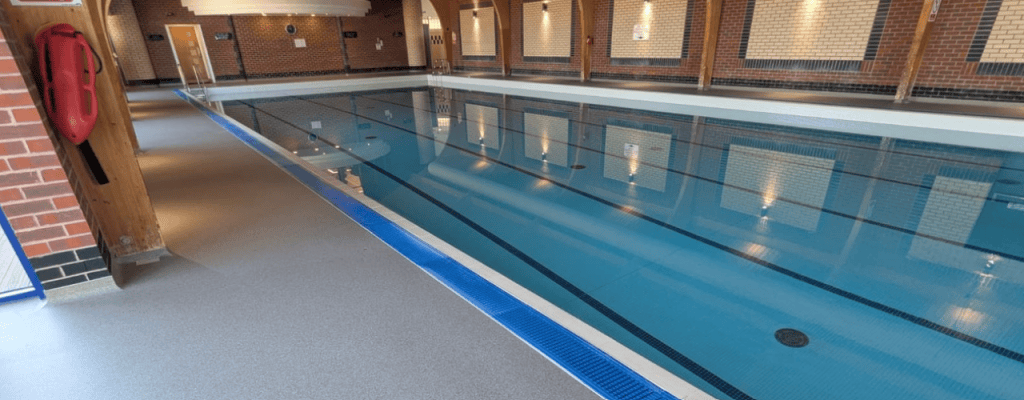
If your pool surround is looking dated or becoming uneven, replacing the entire area may...
Read More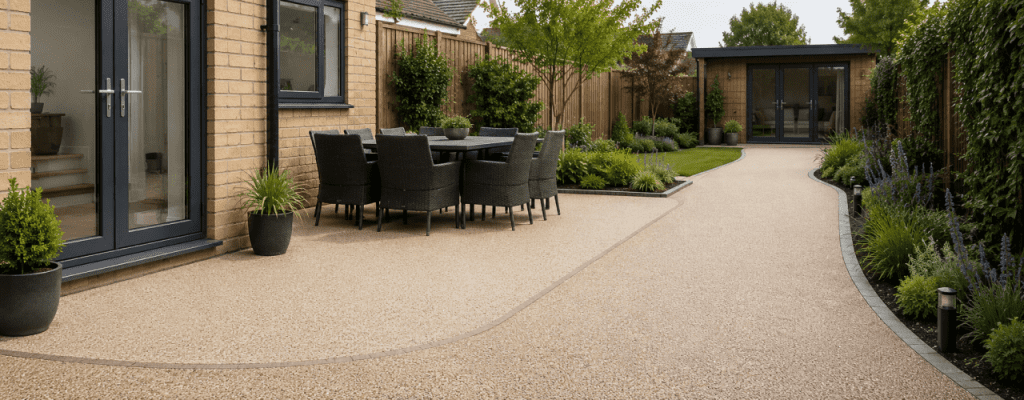
Many homeowners improve patios, pathways and garden rooms but still have awkward steps or settled paving across the route outside. That makes the garden harder to use and breaks up the smooth route a step-free layout relies on.
Our installers at FLEX assess the full route, not just the surface finish. We check the back door threshold, the patio edge, the way paths join and the condition of the base before recommending the right build-up.
A smooth finish is not enough on its own. The route still has to work from the back door to the patio without awkward joins, pooling or soft spots underfoot.
Garden movement matters because it decides how easy the space is to use. When paths have uneven slabs or sudden drops, the garden becomes harder to use.
A seating area or garden room loses value quickly if the route to it feels awkward or unsafe. Traditional block paving can settle over time and create small lips that interrupt a simple walk.
At FLEX, we focus on making the route work first. We use resin bound stone to create more even resin bound patios with dependable slip resistance and long-term durability.
“Once you have confirmed your FLEX installation, a key part of the process is the site visit. This allows our team to really understand the job and all the elements required for a successful project.” Matt Tring Managing Director
Access problems usually develop where the back door meets the paving, where one path runs into another or where older surfaces have settled out of level. Some patios also sit too high against the property, which creates awkward transitions right at the threshold.
Wide joints, raised slab edges and sunken patches can all make movement harder. These issues become more obvious when someone uses walking aids or pushes garden equipment.
Most access problems start at joins and level changes, not in the middle of the patio. Continuous resin bound patios help level out these awkward points and remove sharper drops between areas.
Resin bound patios help create level access by forming a continuous, joint-free surface that can follow changing levels with a controlled gradient. The material combines natural aggregate with a UV-stable polyurethane resin to create a smooth, durable surface.
Without wide joints or loose sections, resin bound patios are easier to cross and easier to keep clean. We hand-trowel the mix so levels work properly against doors, paths and adjoining areas. That gives homeowners a cleaner route with fewer points that catch a foot, wheel or puddle.
If the threshold is wrong or the falls are off, the route still will not work. A level-looking patio will still fail in use if water starts sitting across the walking line.
The porous surface also allows rainwater to drain through, which helps reduce pooling on walking routes. That is one reason resin bound patios work well on routes that need to stay practical in wet weather.
If uneven paving or poor drainage are already affecting how you use the garden, it is worth assessing the route before those problems spread further. Contact us for a free site visit and quote. Our installers at FLEX can check thresholds, levels and base condition before recommending the right build-up, so you know early on whether the route can be improved with an overlay or needs a full rebuild.
Resin bound stone works well for wheelchair ramps since it offers good slip resistance while staying firm and even under wheel pressure. That combination gives homeowners a durable surface designed to handle regular use.
Loose gravel shifts, and block paving can become uneven over time. A resin bound surface can provide a more stable route, which makes it more comfortable for wheels, walking aids and everyday movement.
We also shape edges and slopes carefully so the finished route follows the required access gradient. Small wheels pick up every lip and loose edge, so this part of the route needs to stay consistent.
A successful resin bound patio installation starts with the base and the drainage plan. Our installers need to check that the ground underneath is stable before any new surface goes down. That early work helps us spot weak areas before they turn into movement through the finished patio.
If the base moves, the finish above it will move too. We check the sub-base carefully, confirm where support is needed and plan drainage at the same time. Most failures start below the surface, not on top of it.
That helps stop the same problems showing up again through the new finish.
At FLEX we have delivered this kind of detail on domestic Resin Bound Stone projects before, including a 260m² installation with recessed manhole covers and an asphalt mesh system used to help reduce reflective cracking.
You can often install a new step-free surface over existing paving if the current base is stable. Our specialists check overlay suitability before work begins so we know whether the existing concrete can support the new surface. That helps homeowners avoid paying for an overlay on a base that should have been rebuilt first.
Overlaying an existing rigid base can reduce excavation time and make the installation less disruptive on some step-free patio projects. We only recommend that option when the surface underneath is sound. Overlay only works when the existing surface is genuinely stable. If old slabs are loose or the base has started to sink, we will recommend removing them and rebuilding properly.
FLEX plans gradients and drainage by working out how rainwater should move away from the property. The porous surface works with the falls in the patio and helps direct water away, reducing the chance of standing puddles. That makes the route easier to use in wet weather and reduces the risk of slippery patches building up where people walk most.
A flat-looking patio still needs enough slope to drain properly. We plan those falls carefully so the surface stays practical to use without introducing harsh angles across the route. That helps homeowners avoid puddling near thresholds, garden room doors and the main walking line through the space.
A step-free layout makes it easier to move between the house, patio and garden room every day. You stop having to think about awkward joins or small steps every time you go outside.
You notice the difference in how the garden feels to use. The route feels simpler, and it takes less effort to maintain.
A well-built step-free patio can also make the garden look more finished as part of the wider property.
Well-built resin bound patios also give homeowners a durable surface that keeps performing well over the long term.
Homeowners usually ask about curing time, maintenance and permeability before choosing a step-free patio.
A newly laid outdoor surface typically cures enough for light foot traffic within twenty-four hours. Full chemical curing then takes several more days, depending on the temperature and humidity. We advise keeping heavy garden machinery off the area until the polyurethane achieves maximum material hardness.
Ground-level installations need very little maintenance compared with traditional jointed block paving. Standard care usually means using a stiff brush to remove loose leaves and washing the surface down from time to time.
Because the surface has no open joints, it reduces weed growth and gives moss fewer places to take hold.
Permeability helps reduce pressure on local drainage systems and stops hazardous puddles forming on your regular walking routes. Resin bound surfaces allow water to pass straight through the top layer. That drainage helps reduce winter freezing and keeps the surface steadier underfoot.
Designing a safe access route through your garden starts with a clear assessment of the ground conditions. The experienced installation teams at FLEX can evaluate your existing sub-base and map out a drainage plan that suits your property. Get in touch to discuss a step-free surface that makes your outdoor space easier to use.
Experts in epoxy and polyurethane flooring systems
If your pool surround is looking dated or becoming uneven, replacing the entire area may...
Read More