Can an Old Pool Surround Be Resurfaced Without Removing the Whole Existing Surface?
Wednesday, 21 October 2026
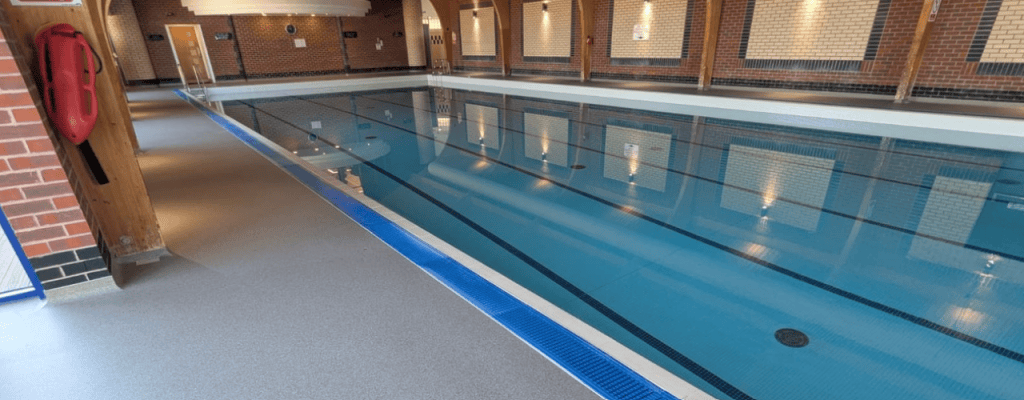
If your pool surround is looking dated or becoming uneven, replacing the entire area may...
Read More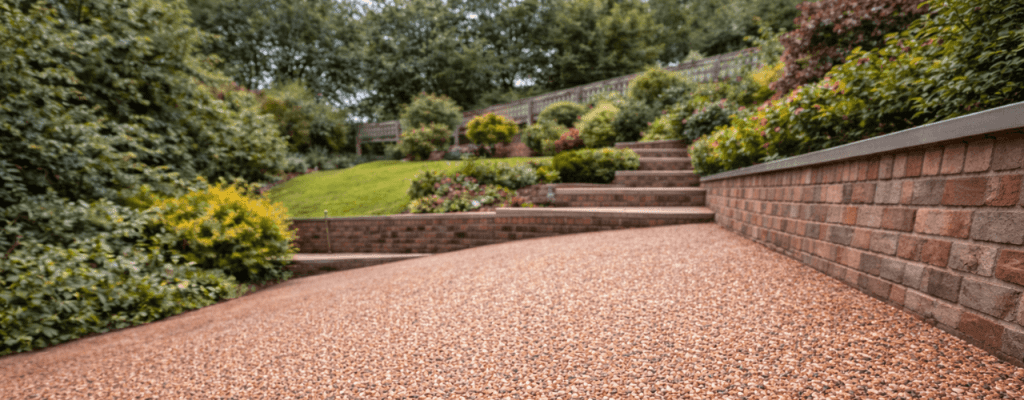
Many UK gardens feature uneven ground or distinct slopes that make landscaping difficult. Dealing with a gradient often leaves homeowners unsure about which surface will remain stable and safe. Standard paving slabs can slip or hold water when installed on an incline, which creates a trip hazard.
At FLEX Flooring, we have spent over 15 years perfecting the installation of seamless surfaces on challenging terrains. Resin bound patios are suitable for sloped gardens when installed with the correct ground preparation and sub-base. The permeable nature of the material allows water to drain through the surface, reducing runoff and preventing puddles. This guide explains how our specialist teams handle gradients and the technical steps required for a secure installation.
A sloped garden creates challenges regarding water management and surface stability. Gravity forces rainwater down the gradient, which can wash away loose materials or cause pooling at the bottom. Uneven ground also places more structural stress on rigid patio installations than flat surfaces.
Traditional surfaces often struggle to cope with heavy rain on a steep gradient. Paving slabs require precise falls and specific drainage channels to work. When water flows too quickly across a hard surface, it often overwhelms these channels and leads to flooding or soil erosion around the edges.
Movement is a significant risk on uneven terrain because a steep incline increases the chance of materials shifting. Hard landscaping on a slope requires a strong sub-base to keep everything in place. If the foundation is inadequate, the surface may gradually slide or sink. Addressing these physical forces early in the planning stage prevents long-term structural failure for resin bound patios.
Sloped installations are highly dependent on dry ground conditions for the initial excavation. We recommend scheduling site surveys early in the season to ensure your sub-base is stabilised before heavy autumn rainfall increases the risk of soil erosion. Book a Technical Site Survey here.
Resin bound patios perform well on uneven levels since their porous structure manages rainwater runoff naturally. The mixture of aggregates and clear polyurethane resin creates continuous voids. These voids allow water to drain through the surface rather than racing down the slope as surface runoff.
Instead of acting like a slide for rainwater, the surface absorbs the flow and directs it into the ground. This prevents puddles from forming at the bottom of the slope and reduces the strain on local drainage networks. It also helps protect surrounding planted areas from sudden floods.
The seamless finish provides a continuous layer of strength across the entire gradient. There are no grout lines or joints to weaken under the pressure of moving water or shifting ground. The material accommodates natural temperature changes, which lowers the risk of cracking compared to rigid concrete.
Preparing a sub-base on a gradient requires terracing and ground stabilisation to ensure the final surface remains structurally sound. Installers excavate the ground to create a compacted stone foundation that supports the resin layer. This prevents future subsidence or the material slipping down the incline.
To ensure resin bound patios remain immovable on a gradient, our team follows a rigid stabilization protocol:
Steps and retaining structures are necessary when a garden slope is too steep for a continuous pathway. These features break up the gradient into manageable levels. They hold back the soil safely while providing defined anchors for the resin material.
Retaining walls built from brick or timber sleepers provide the structural support for terraced areas. When a drop is severe, breaking the patio into split levels is often safer. The edges are secured using aluminium or stainless steel trims to stop the mixture from migrating downhill during the installation process. You can trowel resin bound stone vertically. We recommend VubaRend, the universal tack coat and binder for vertical applications.
Safety is a primary concern when installing resin bound patios on an incline. A textured finish is applied to the aggregate mixture specifically to increase grip. This slip resistance protects users when they are walking on the slope during wet conditions.
Walking on a gradient requires more underfoot traction as smooth surfaces become hazardous after a rain shower. By selecting specific aggregate sizes and adding crushed glass or anti-slip sands, the traction improves. This makes the area safer for residents and guests throughout the year.
High-quality resin bound patios use aliphatic polyurethane resin to bind the stones together firmly. This UV-stable binder ensures the surface will not yellow or degrade under direct sunlight. Maintenance involves occasional sweeping and gentle pressure washing to keep the pores clear of debris and moss.
Installing resin bound patios on slopes requires technical planning to ensure drainage and stability. Most homeowners want to know about the limits of the material and how it interacts with heavy rain. These answers cover the most common technical concerns regarding gradients.
A gradient of up to one in ten is generally acceptable for a continuous surface. For slopes steeper than this, professional installers recommend incorporating terraced levels or steps. This ensures the area remains safe for everyday walking and prevents the material from being overstressed.
Rainwater passes through the voids between the bound stones and enters the permeable stone sub-base. The water then filters into the earth below. This eliminates rapid surface runoff and prevents water from pooling at the lowest section of the garden.
Laying materials on a slope requires specific trowelling techniques to prevent the heavy mixture from slumping downhill before it cures. Experienced teams understand how to mix and pour the surface evenly against gravity to ensure a hard-wearing bond. You can see examples of how we handle complex gradients in our case studies.
Leaving a sloped garden unprotected through another winter can lead to progressive soil movement and expensive foundation repairs. If you need help planning your next project, get in touch with our team to secure a site visit before our seasonal schedule reaches capacity.
Experts in epoxy and polyurethane flooring systems
If your pool surround is looking dated or becoming uneven, replacing the entire area may...
Read More