Can an Old Pool Surround Be Resurfaced Without Removing the Whole Existing Surface?
Wednesday, 21 October 2026
If your pool surround is looking dated or becoming uneven, replacing the entire area may...
Read More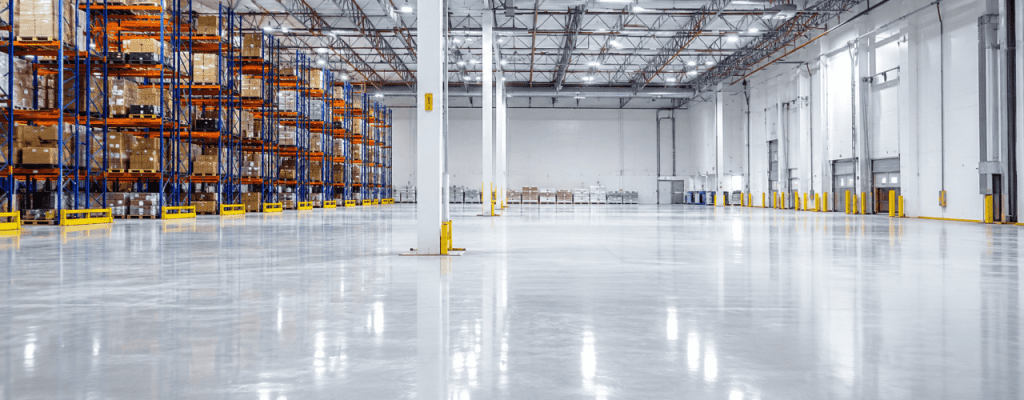
Upgrading your facility floor is a major capital expense requiring specific material selection to guarantee long-term performance. If your current concrete substrate is failing or creating trip hazards, industrial epoxy flooring provides a high-build, continuous surface engineered specifically for heavy-duty traffic.
At FLEX we install industrial systems that eliminate weak construction joints and porous grout lines. Understanding the exact mechanical preparation requirements and chemical specifications before installation prevents costly operational downtime and concrete substrate failure.
Subfloor preparation is critical for industrial epoxy flooring as it guarantees the chemical resin bonds securely to the concrete base. Proper mechanical preparation via diamond grinding removes surface laitance and trapped moisture. This creates a textured profile that thoroughly prevents the epoxy system from blister failures or delaminating prematurely.
Our installers at FLEX begin by testing the existing concrete substrate for moisture content and structural stability. Concrete slabs frequently conceal elevated moisture levels or hidden structural cracking. These issues require specific damp proof membranes or epoxy repair mortars prior to coating. We apply advanced mechanical grinding and captive shot-blasting to achieve the exact concrete surface profile required for optimal chemical adhesion. If the concrete base is severely deteriorated, a polymer-modified levelling screed is installed to establish a flat, load-bearing foundation for the final industrial epoxy flooring system.
Typical operational downtime for installing industrial epoxy flooring ranges from two to four days depending on the project footprint. This timeframe accounts for mechanical surface preparation, primer application, and the core coating. A final chemical curing process is then required before the new surface safely accepts heavy vehicular traffic.
To manage the installation timeline effectively, facility managers must coordinate specific site conditions prior to the application team arriving. Clearing all movable machinery from the concrete slab and confirming adequate mechanical ventilation aids the chemical curing phase. Fast-curing MMA flake systems are available if your active loading bays, production areas or warehouse routes demand a rapid return to service. We sequence the mechanical preparation, priming, and coating stages precisely, so facility operations resume exactly when the epoxy reaches full hardness.
Identifying the correct industrial epoxy flooring requires matching the chemical resistance and load-bearing properties of the material to your operations. Industrial manufacturing plants require heavy-duty PU screed for repetitive forklift impact. Lighter-use industrial areas may need UV-stable, decorative epoxy coatings that provide strong slip resistance without over-specifying the system.
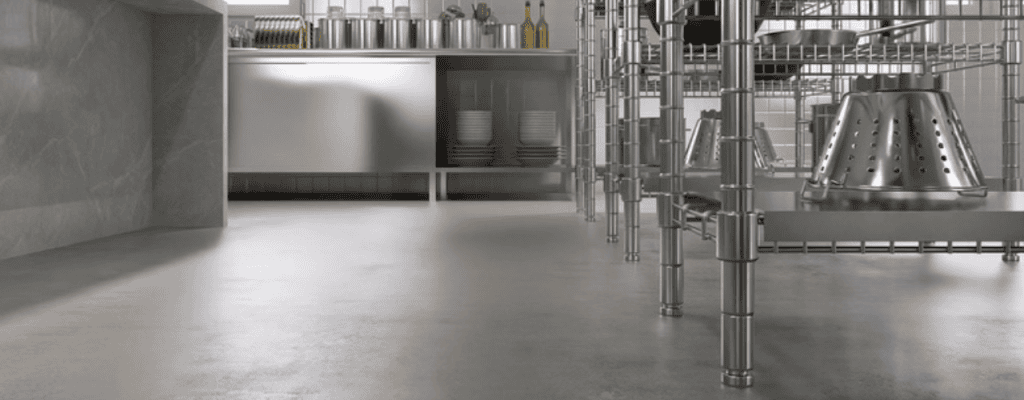
FLEX specifies formulations based on exact site requirements as standard epoxy systems cannot always handle aggressive acid exposure. Commercial kitchens and chemical processing areas need specific antimicrobial polyurethane flooring to withstand extreme temperature fluctuations and heavy washdown procedures. Staff walkways, production corridors and lighter-use industrial areas may use high-build epoxy coatings with slip-resistant aggregates to support safe movement and easier cleaning. Our team evaluates your mechanical abrasions and pedestrian traffic volumes to specify an exact topcoat that maintains its structural stability over decades.
“We have a number of unique industrial flooring systems. Whether you need a floor that can handle temperature changes, forklift traffic or chemical spillages, we can ensure you get the right system for your needs” – Katie Pepper, Business Development Director, FLEX Surfaces and Floors
The required thickness of an industrial epoxy flooring system depends directly on the facility’s traffic type and impact volume. Light pedestrian zones perform reliably with thin-coat epoxies applied at two millimetres. Heavy manufacturing areas handling continuous forklift traffic require heavy-duty polyurethane screeds installed at six to nine millimetres.
Specifying an inadequate floor thickness for your load-bearing requirements causes rapid surface degradation and concrete substrate cracking.
FLEX calculates the necessary depth based on dynamic loads, daily operational stress and the condition of the existing substrate. Medium build Deckmaster systems handle the intense pallet truck movement typical in busy distribution warehouses and packaging halls. By installing correctly specified thicknesses, we keep the concrete slab protected against heavy abrasion and point-loading impact.
Continuous industrial epoxy flooring requires very little long-term maintenance since the monolithic surface lacks dirt-trapping construction joints. Standard facility upkeep involves routine mechanical sweeping and regular machine scrubbing using neutral detergents. This basic cleaning regimen easily removes surface contaminants and maintains the legally required slip-resistance ratings.
Facility managers look for cost-effective building materials to permanently reduce ongoing operational overheads. Industrial epoxy and polyurethane floor screeds eliminate the need for applying sacrificial waxes or aggressive chemical stripping treatments. The continuous, non-porous finish effectively stops microbial growth. This makes it the standard specification for pharmaceutical cleanrooms and industrial food processing plants. When heavy vehicular traffic eventually causes superficial topcoat abrasion, the existing industrial epoxy flooring is simply mechanically abraded and re-coated with a fresh sealer.
Planning an installation begins with a detailed technical site survey to accurately assess the structural base. Documenting your traffic volumes and chemical exposure levels gives industrial installers the exact data needed. This initial physical assessment allows our team to precisely specify the optimal chemistry for your project.
Formulating an accurate specification strategy directly prevents unexpected budget overruns and prolonged facility closures. A qualified installer supplies a technical schedule detailing the required mechanical floor preparation and precise chemical curing intervals. Partnering with a specialist installer guarantees the specified polyurethane or epoxy system bonds correctly and achieves maximum compressive strength before heavy traffic resumes. At FLEX we provide specific method statements and risk assessments so your new floor performs safely under heavy industrial use.
Contact FLEX today to schedule a technical site survey and pinpoint the correct system for your specific site. Our installers are ready to execute a practical floor upgrade for your building. We schedule the works carefully to cause minimal disruption to your daily active trading hours.
High-quality industrial epoxy flooring typically lasts between ten and twenty years in demanding industrial environments. This operational lifespan relies heavily on executing the correct mechanical surface preparation prior to coating. The final thickness must also precisely match the facility’s daily vehicular traffic to prevent premature wear.
Specialist installers regularly install industrial epoxy flooring directly over existing concrete floors. The structural substrate must initially be assessed for compressive strength and latent moisture issues. Before applying the primer, the concrete slab undergoes captive shot-blasting to strip away chemical contaminants and cement laitance for direct adhesion.
Anti-slip quartz additives are used in retail environments to comply with UK Health and Safety Executive slip-resistance regulations. Public-facing commercial areas must maintain rigorous traction standards, especially near exterior entrances facing wet conditions. FLEX incorporates calibrated aggregates into the topcoat to achieve the exact required pendulum value.
Experts in epoxy and polyurethane flooring systems
If your pool surround is looking dated or becoming uneven, replacing the entire area may...
Read More