What Should Schools Check Before Installing Resin Kitchen Flooring?
Wednesday, 30 September 2026
A school kitchen works within narrow service windows. Breakfast preparation may begin early; lunch must...
Read More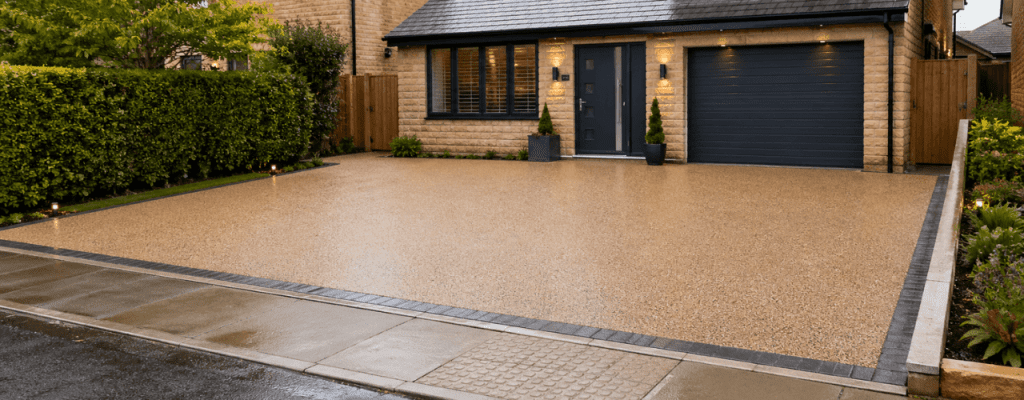
Installing a new driveway requires a clear understanding of UK drainage laws and local council regulations. Most property owners want a durable surface that remains legally compliant without the stress of complex paperwork. Resin-bound systems offer a technical solution that balances heavy-duty performance with strict environmental standards.
Most homeowners find that planning permission is not required for a resin-bound driveway. Because the surface is naturally permeable and SuDS-compliant, it typically falls under “Permitted Development” for residential front gardens. While the material itself usually removes the need for an application, specific exceptions still apply to projects involving dropped kerbs or listed buildings.
FLEX provides poured and hand-trowelled flooring systems designed to support heavy vehicle traffic while managing water transit automatically through your new resin driveway.
Since the 2008 Sustainable Drainage Systems (SuDS) regulations, any new front garden surface over five square metres must be permeable. The law requires that rainwater soaks naturally into the ground rather than running onto public roads or into the overstretched municipal sewer network.
Compliance depends entirely on your material choice and the quality of the site excavation:
At FLEX we ensure your project meets these environmental standards from day one, providing the technical evidence local authorities expect regarding water behaviour on-site.
A resin-bound driveway generally falls under “Permitted Development” because the system is fully permeable. Unlike resin-bonded surfaces (where stone is scattered over a solid base), a resin-bound system allows water to flow through small gaps between the stones and drains directly into the sub-base.
The technical design of these surfaces is engineered for compliance:
The sub-base is arguably the most important stage of the surfacing contract. Even the most porous top layer will fail a SuDS test if the foundation is solid concrete.
To remain compliant and durable, we utilise an open-graded macadam base. This provides the structural support needed for heavy vehicle traffic while allowing moisture to pass through into the water table. This focus on groundwork stops the formation of puddles and ensures your resin driveway investment is a permanent, legally compliant solution for modern drainage requirements.
While the resin material itself is compliant, certain project features will always trigger a need for council approval:
Conservation areas have strict rules about property appearance. Different councils have specific restrictions to protect local heritage, often dictating the allowable colours of stone aggregates.
We specialise in precise aesthetic matching for these sensitive zones. We use decorative, natural stone finishes that complement traditional brickwork and period architecture, satisfying visual requirements while meeting modern performance needs for your resin driveway.
Many local councils are increasing inspections on new driveways to ensure SuDS compliance. To avoid the risk of enforcement notices or costly retrospective applications, speak to a specialist today to ensure your project is compliant before work begins.
The permeability of the finished floor is determined during the mixing stage. If there is too much binder, the voids are filled and water cannot pass through; if there is too little, the stones will break loose under tyre pressure.
FLEX installers verify every technical specification:
A professional installation by FLEX lasts over twenty years. The polyurethane binder is flexible, resisting cracks during freezing temperatures, making it a cost-effective choice for both homes and commercial sites.
Get in touch with Flex Flooring to discuss your surfacing project. Our specialists are ready to provide a finish that meets your technical and legal requirements.
Most residential projects take two to three days. The first day involves preparing the open macadam sub-base. FLEX installers then mix the materials and lay the resin-bound surface on the final day.
You can, provided the base is stable and crack-free. However, if the old concrete is not permeable, you will need to install additional drainage channels to remain SuDS compliant.
Experts in epoxy and polyurethane flooring systems
A school kitchen works within narrow service windows. Breakfast preparation may begin early; lunch must...
Read More