Why Does Commercial Kitchen Flooring Keep Needing Repairs?
Wednesday, 7 October 2026
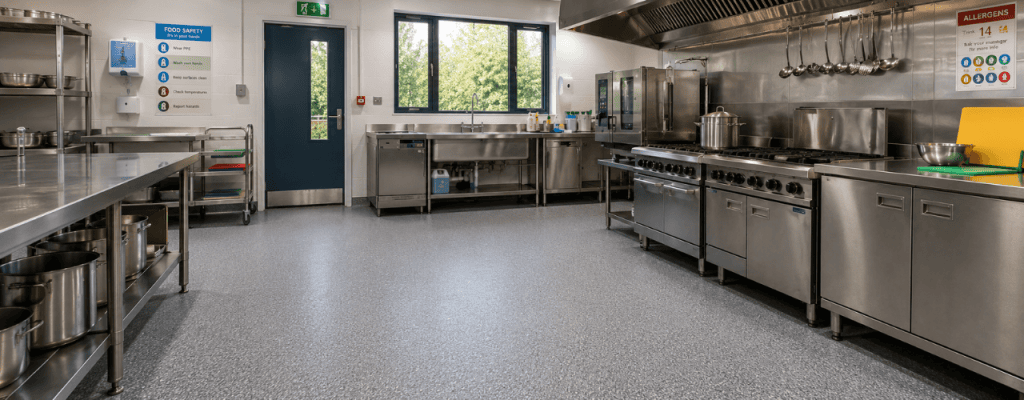
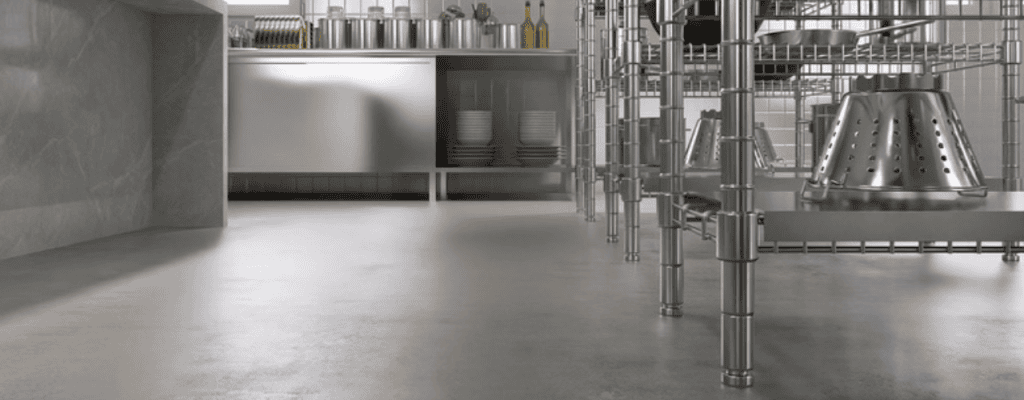
Seeing the same area of Commercial kitchen flooring fail again is frustrating. Every repeat repair...
Read More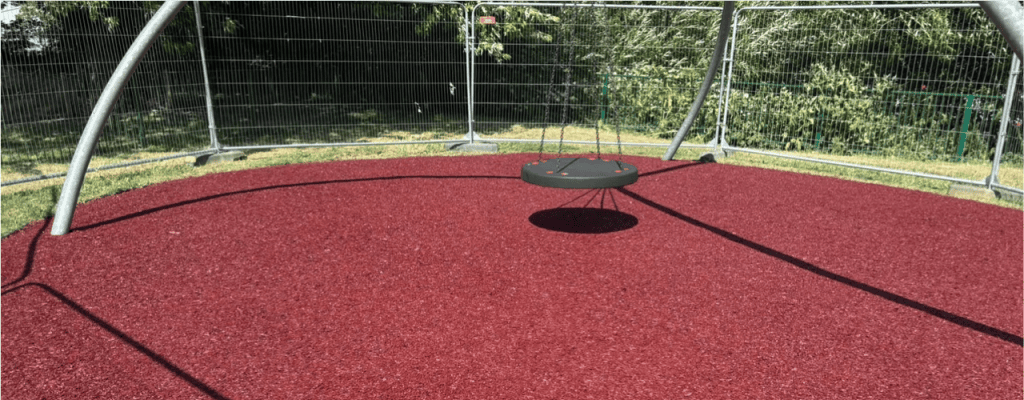
Common visible problems on school and public playgrounds include splits, worn areas and damaged edges. If damage spreads, keeps returning or appears across several areas, the cause may sit deeper in the surface or base.
Playground flooring can often be repaired without resurfacing the whole area, but the surrounding wet pour, base, drainage and equipment zones need to be understood first. Widespread cracking, movement or recurring defects are stronger reasons to assess a larger section before another patch is agreed.
At FLEX, we inspect the damaged area and the surface around it before recommending the scope. Our installers review the base, drainage, edges, equipment positions and required surface depths to establish if a targeted repair is realistic or wider resurfacing should be considered.
The visible defect tells us where to start. It does not tell us the full repair scope.
Yes. Local wet pour repairs can be suitable where damage is confined to one part of the surface.
A worn section, isolated cut or small damaged area does not automatically mean the whole playground needs resurfacing. We still need to check that the surrounding wet pour and supporting base are sound.
If the defect sits within a wider pattern of cracking, movement or recurring repairs, assessing the larger area is more useful than adding another patch.
The pattern of failure gives us the clearest early indication of which route is worth assessing.
A local repair may be worth assessing when:
Wider resurfacing should be assessed when:
These signs guide an inspection, but they do not determine the scope on their own. We still need to establish what sits beneath the visible damage and how much of the existing flooring remains suitable to retain.
One local crack and cracking across several areas should not be treated as the same problem.
Widespread or recurring cracks can point towards movement beneath the surface, deterioration across a larger area or problems with the original build-up.
We pay particular attention to cracks around:
If cracks reopen after repair, the substrate, edge detail or wider build-up needs investigating rather than treating each split as an unrelated defect.
The crack is visible. Its cause may not be.
Not automatically.
RubbaFlex® SG is porous, so water management depends on the complete surface and base construction. Pooling after rain warrants investigation, but a new top surface will not necessarily correct the cause.
Pooling may relate to levels, drainage or the supporting base. The cause needs to be understood before the repair scope is decided.
A local repair may be possible where one small area has settled. If drainage or levels affect a larger section, resurfacing only the visible low point could leave the problem unresolved.
At FLEX, we assess the levels, drainage and supporting base around the affected area before recommending the repair scope. If the cause sits beneath the wet pour, we can factor the necessary ground preparation or drainage work into the specification rather than simply resurfacing over the visible problem.
A smooth new finish cannot correct a base that is still directing water to the wrong place.
At FLEX, we look closely at worn areas around swings, climbing equipment and other high-use zones before recommending a local repair.
Impact-absorbing playground surfacing around equipment needs to suit the equipment’s free height of fall. BS EN 1177 sets the test methods used to assess impact attenuation and critical fall height, so we establish the required build-up before repair work is agreed. With RubbaFlex® SG, deeper construction is used where the free height of fall requires it.
We check:
If the affected area no longer provides the intended build-up, the repair needs to restore that construction rather than simply cover the visible wear.
If equipment is being replaced or moved, we also review the flooring specification against the new layout.
Sometimes, but failure in the supporting base has to be addressed as part of the repair. Repairing the rubber surface alone will not correct movement underneath it.
When we assess a playground refurbishment, we inspect the existing substrate before specifying the build-up.
The reality of any surface is that there is always a small chance that it gets damaged. This is why surface preparation is so important. We ensure that this element is a key part of the process when quoting and undertaking work And we will always consider the underlying surface in cases where a repair is required. Matt Tring, FLEX MD
RubbaFlex® SG can be installed at 15 mm over suitable asphalt or concrete. Our other recommended approach uses a 25 mm SBR base layer over compacted stone. Around climbing equipment, we increase the RubbaFlex® SG surface depth where the free height of fall requires it.
Those figures are not a universal repair specification. They show why the existing construction must be established first.
If the base is moving, another layer of rubber above it does not remove that movement.
If edge support or adjoining levels are contributing to the defect, those details also need addressing as part of the repair.
When defects keep returning or spread across several areas, wider resurfacing is worth assessing before another patch is added.
Wet pour can be repaired locally, so previous repairs do not automatically mean full resurfacing is necessary.
The decision changes when new defects keep appearing around previous repairs or several separate areas need work. Another patch may treat the visible defect while leaving the underlying cause unresolved.
Colour matching can also become more difficult where the surrounding wet pour has changed through UV exposure over time.
Full resurfacing should not be automatic, but the whole affected area should be assessed when local repairs are becoming difficult to justify.
No. Colour change alone does not show that the surface has physically failed.
Our standard RubbaFlex® SG system uses an aromatic polyurethane binder that is not UV stable, so some colour change can occur with UV exposure over time.
If no other defects are present, fading alone does not establish that resurfacing is needed. Cracking, lifting, movement and loss of the required build-up should drive the condition assessment.
Regular inspection still matters so splits, movement, worn areas and drainage changes can be identified and assessed early.
We start by checking how far the failure extends and what is happening beneath and around the damaged area.
That can include the wet pour, substrate, drainage, edges and equipment layout, including any surface-depth requirements around play equipment.
If your playground flooring is cracking, lifting, wearing around equipment or holding water, reach out to us for a free site visit. We’d be happy to assess the affected area and discuss a targeted repair or wider resurfacing before you commit budget.
Experts in epoxy and polyurethane flooring systems
Seeing the same area of Commercial kitchen flooring fail again is frustrating. Every repeat repair...
Read More