When Should Playground Flooring Be Repaired or Fully Resurfaced?
Wednesday, 14 October 2026
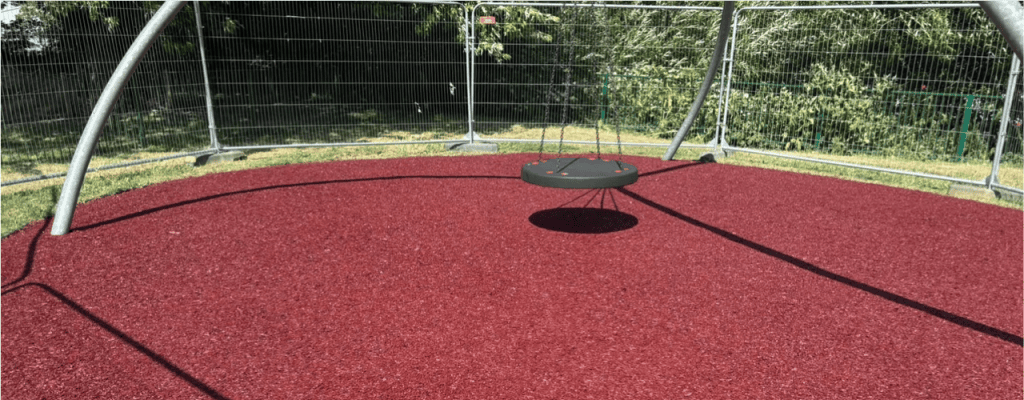
Common visible problems on school and public playgrounds include splits, worn areas and damaged edges....
Read More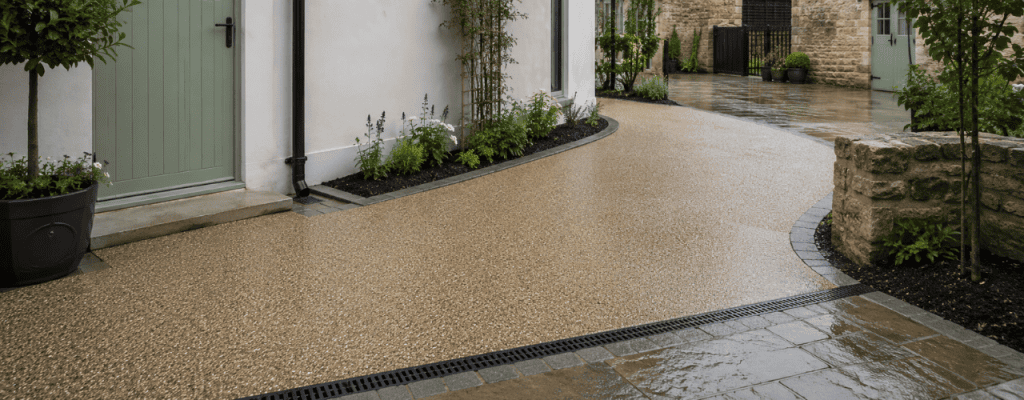
Wet weather exposes poor surface decisions quickly. You usually notice the problem first in the places people use every day: the back door, the path to the bins, the courtyard entrance, the driveway edge or the old concrete patio that never dries properly. Puddles sit where levels are wrong. Algae forms in damp corners. Loose paving shifts after repeated rainfall.
If the same puddle appears after every storm, changing the surface colour will not solve the problem.
Resin bound flooring gives these areas a clean, permeable finish, but only when the base underneath is right. At FLEX, we review the existing surface, door levels, edge detail and where the water needs to go before we recommend a resin bound stone system.
Planning a patio, path, courtyard or shared external area in Kent? Ask us to assess the base and drainage detail before the job is priced or agreed.
Usually, the problem is not only the surface you see. It is the levels, base and drainage detail underneath it.
Heavier rainfall is becoming a bigger design concern for external surfaces, especially older patios and paths with poor falls or weak drainage. Under a high-emissions scenario, the Met Office projects that UK winter rainfall intensity could increase by up to 25% by 2070 compared with 1990.
Older hard surfaces show the strain first. Paving settles at the joints. Standard concrete holds water in shallow dips. Tarmac breaks around edges. Shaded paths stay damp for longer where leaves and soil collect.
For a homeowner, that might mean a wet route between the back door and garden room. For a landlord, it might mean residents avoiding a shared courtyard after heavy rain. For a commercial site, it might mean visitors stepping around puddles before they reach the entrance.
If you want to reduce puddling on a resin bound patio, path or courtyard, the surface needs to let water move and the base needs to send it somewhere useful. Resin Bound Stone gives you a strong option when the site detail is right.
Resin Bound Stone uses natural aggregate mixed with resin. Installers trowel the mix into a smooth, open-textured finish. Small voids between the stones let rainwater pass through the surface instead of sitting on top.
The water still needs somewhere to go.
On a suitable free-draining build-up, rainwater passes through the resin bound surface and into the prepared layers below. From there, the water still needs a clear route into the ground or to a suitable drainage outlet. That route depends on the base, levels and site conditions.
On standard concrete, the surface normally needs planned falls, channels or another outlet. If nobody plans that route for water, the same wet areas usually return around low points, doors or edges.
For Resin Bound Stone, we work with Vuba materials. Our system is SuDS compliant and fully permeable, with VubaMac and Vuba SRM providing structural reinforcement where the full system is specified. For driveway projects where the full system is installed, Vuba’s published 5-year no-crack guarantee may apply.
“We only install Vuba products and the complete system, including topping, VubaMac base and Vuba SRM combines strength and permeability. VubaMac is not only SuDS compliant, but eco-friendly too. It incorporates 100% repurposed waste aggregate, all processed in the UK at Vuba’s own processing plant.” Ella Palmer, Sales Administrator.
A useful site review should change decisions. At FLEX, we check the details that affect how the surface handles rain after installation.
The existing base decides if overlay is suitable. Stable concrete or tarmac may support a resin bound finish. Cracked, hollow or loose areas point towards repair, deeper preparation or a different build-up.
Levels decide how rainwater leaves the area. A path that falls towards a wall needs a different drainage detail from a patio that falls away from the house. A courtyard with a low centre needs a plan for water before choosing the finish.
Thresholds decide finished height. Back doors, garage doors, bin stores, communal entrances and shopfronts all need accurate detailing. A neat finish creates problems if it forms a lip, traps water at a doorway or clashes with an existing drain.
Edges and use decide how strong the build-up needs to be. Kerbs, steps, inspection covers and channel drains often fail first where people turn, wheel bins, move furniture or park vehicles. A quiet patio does not place the same pressure on the surface as a shared entrance route or driveway turning area.
Overlay works where the existing surface has enough strength to carry the new finish. It often reduces disruption, but it should never cover a failed base.
Standard concrete needs close review because it is usually impermeable. If we lay Resin Bound Stone over concrete, the drainage design must account for that. The surface may need planned falls, suitable outlets or drainage channels.
Tarmac may suit an overlay where it remains stable and well bonded. Old tarmac often fails at the edges or softens where water has already entered. Those areas need repair before installation.
At FLEX, we confirm surface stability, level changes, drainage outlet and finished height before we recommend overlay. That avoids paying for a clean finish over a problem that should have been corrected first.
Poor drainage usually shows first where water meets regular use.
You might see dirty water sitting near a low back-door threshold, moss forming along a shaded path or loose edges around a drain. Puddles may remain long after rain stops. Water may run towards the building. Dirt may collect in the same low spot every time.
These issues affect access, cleaning, safety and surface life. At FLEX, we look for these signs before we recommend overlay, preparation or a Resin Bound Stone system. A smooth finish alone will not deal with the problem.
Permeable surfaces need regular care. The open texture that lets water through also collects silt, leaves and organic matter when cleaning gets neglected. Regular maintenance keeps the surface open enough for water to drain properly and helps prevent leaves, silt and organic matter from blocking the voids.
For patios, resin bound pathways and courtyards, this means sweeping leaves, clearing soil before it blocks surface voids, cleaning shaded areas where moss starts to form and checking drain channels after bad weather.
Low-maintenance does not mean no maintenance. Regular care protects permeability and keeps the area easier to use after rain.
Resin bound flooring installation in Kent needs careful site judgement. Many projects involve old concrete, tired tarmac, settled paving, low thresholds, awkward drains and shaded areas that stay wet after rain.
At FLEX, we start with the site. Our installers review the base, access, edge restraints and drainage detail before we recommend a Resin Bound Stone system. That approach helps reduce under-specification and avoids unnecessary preparation where overlay is suitable.
For homeowners, this gives clearer advice before replacing a patio, path or resin bound driveway. For landlords and managing agents, it supports better planning for shared routes and communal courtyards. For commercial property owners, it means the surface suits daily access, cleaning and wet-weather use.
Planning a resin bound patio, path, courtyard or driveway in Kent? Ask us to review the area before the build-up is agreed.
Yes, when the full build-up supports drainage. The resin bound surface lets water pass through, but the base and levels still need to move water to the right place.
It reduces puddling where poor surface permeability causes the issue and the site has a suitable outlet for water. It will not correct a surface that falls the wrong way or a drainage system that lacks capacity.
A resin bound finish can be specified with slip resistance in mind. We can specify additives to increase slip resistance where the site needs it. Texture, aggregate choice, drainage and maintenance also affect how the surface performs in wet weather.
Look for movement, loose edges, hollow patches, standing water and awkward door levels. These signs do not always rule out overlay, but they do need a proper check. At FLEX, we assess the surface condition, where the water goes and the finished height before confirming if overlay makes sense.
For driveways, GOV.UK says homeowners do not usually need planning permission when a new or replacement driveway uses permeable surfacing or directs rainwater to a lawn or border. Traditional impermeable driveways over 5 square metres usually need planning permission if runoff does not go to a permeable area.
If your patio, path, courtyard, driveway or shared route struggles after heavy rain, start with the site rather than the surface colour. At FLEX, we review the existing base, door levels, drainage and edge detail before we recommend a Resin Bound Stone system.
Contact us for a site review and quote. We’ll check the surface, drainage and levels before recommending the right Resin Bound Stone system for your project.
Experts in epoxy and polyurethane flooring systems
Common visible problems on school and public playgrounds include splits, worn areas and damaged edges....
Read More